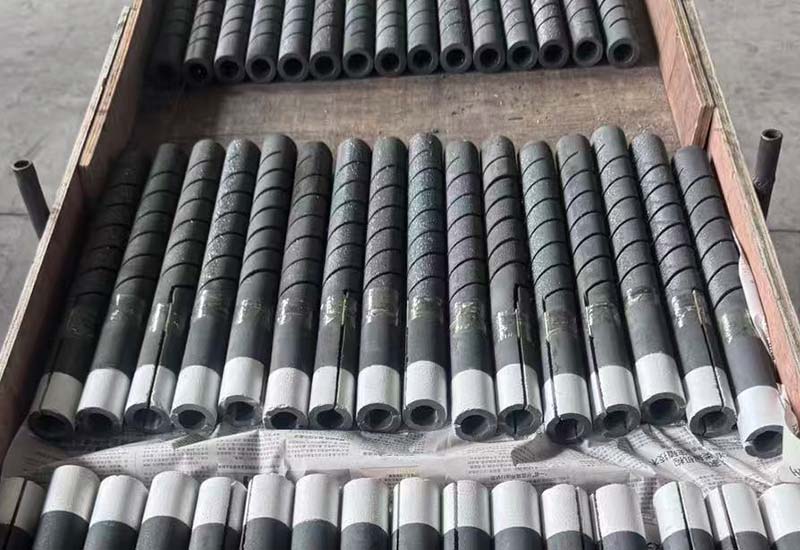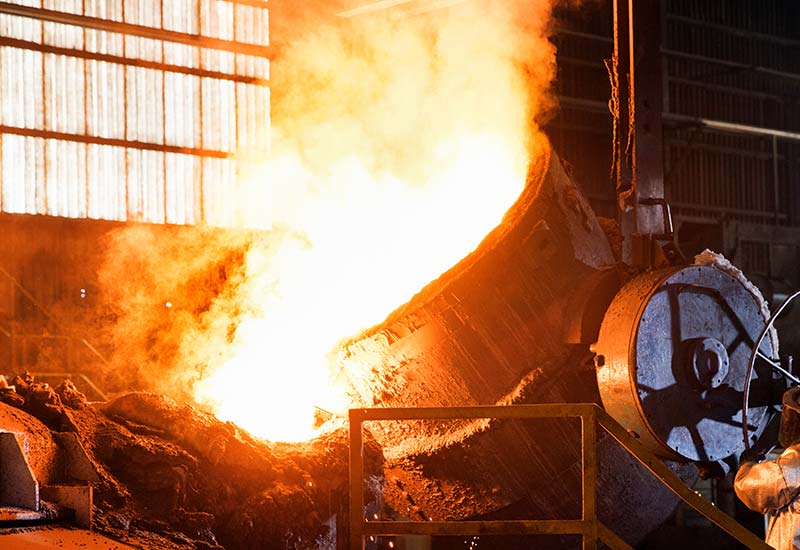
Silicon carbide heating elements have become essential components in high-temperature industrial applications worldwide. As a leading SiC heater element manufacturer, we understand the critical role these components play in furnace operations across ceramics, glass, metallurgy, and semiconductor industries. This comprehensive guide explains what makes silicon carbide heating rods superior to traditional metal heating elements and how to select the right solution for your furnace.
Inhaltsverzeichnis
What Is a SiC Heater Element and How It Works
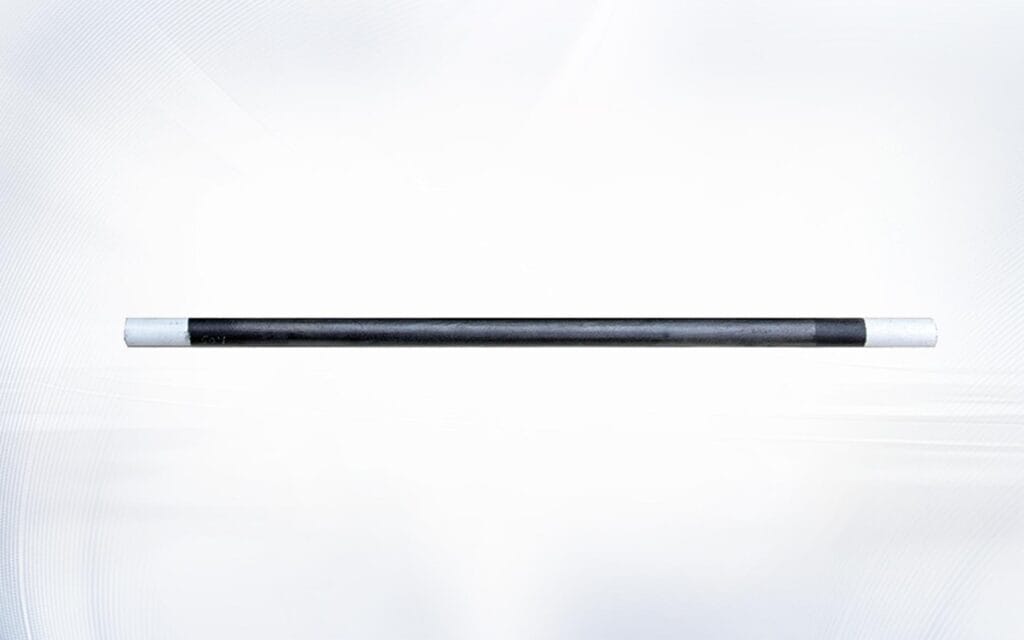
A SiC heater element is a non-metallic heating component made from high-purity silicon carbide material. Unlike conventional metal heating wires that oxidize rapidly at elevated temperatures, silicon carbide heating elements operate reliably in extreme thermal environments reaching 1600°C.
The basic working principle involves converting electrical energy into heat through resistance. When electrical current passes through the silicon carbide material, it encounters resistance, generating intense heat according to Joule’s Law (P=I²R). What distinguishes SiC from other materials is its unique semiconductor properties and crystalline structure formed through recrystallization at 2200°C.
Electrical Conductivity and Resistance Characteristics
Silicon carbide exhibits a distinctive resistance-temperature relationship that affects furnace operation. At room temperature, SiC elements have relatively high and variable resistance. As temperature increases to approximately 800°C, resistance drops to a minimum value. Beyond this point, resistance increases gradually with rising temperature throughout the operating range.
This characteristic has important implications for power supply design. The nominal element resistance is measured at a standard calibrating temperature of 1050°C. As elements age during operation, resistance increases progressively—a phenomenon known as “aging.” Quality SiC heating elements typically increase resistance at 5-6% per 1000 hours when operating continuously at 1400°C in clean air.
Temperature Performance in Industrial Furnaces
SiC heating elements demonstrate exceptional temperature capabilities:
- Maximum element temperature: 1600°C in optimal conditions
- Recommended continuous operation: 1450-1550°C for extended service life
- Practical furnace chamber temperature: Up to 1540°C
However, maximum operating temperature varies significantly with furnace atmosphere. In oxidizing environments like air, SiC elements perform optimally, forming a protective silicon dioxide (SiO₂) layer that slows further oxidation. In reducing atmospheres—hydrogen, nitrogen, or hydrocarbon environments—maximum temperatures drop substantially, requiring careful application engineering.
Why Silicon Carbide Heating Rods Are Widely Used in Industry
The industrial adoption of silicon carbide heating elements stems from their unique combination of material properties that overcome limitations of traditional heating solutions.
High-Temperature Resistance: While metal heating wires like Kanthal operate effectively only up to 700°C, SiC elements withstand temperatures more than double this limit. This capability opens applications in ceramics sintering, glass melting, and metallurgical processes requiring sustained high temperatures.
Oxidation Resistance and Stability: Silicon carbide naturally forms a protective oxide layer when heated in air, preventing rapid degradation common with metallic elements. This self-protecting characteristic ensures stable performance over thousands of operating hours.
Mechanische Festigkeit: Even at extreme temperatures, SiC maintains high mechanical strength with minimal deformation. The material’s hardness (Mohs 9.5, approximately 16 GPa) provides excellent resistance to mechanical damage during installation and operation.
Chemical Stability: SiC demonstrates outstanding resistance to acidic and alkaline environments, making it suitable for chemical processing furnaces and corrosive atmospheres where metal elements would fail rapidly.
Comparison with Kanthal and Metal Heating Wires
| Property | SiC-Heizelemente | Metal Heating Wires (Kanthal) | MoSi₂ Elements |
|---|---|---|---|
| Maximale Temperatur | 1600°C | 700°C | 1800°C |
| Typical Service Life | 2000-3000 hours (1400°C) | 500-1000 hours (600°C) | 3000-5000 hours (1700°C) |
| Oxidationsbeständigkeit | Excellent (self-protecting) | Limited | Ausgezeichnet |
| Thermoschockbeständigkeit | Hoch | Mäßig | Lower |
| Atmosphere Compatibility | Oxidizing & reducing | Oxidizing only | Oxidizing preferred |
| Anfangskosten | Mäßig | Niedrig | Hoch |
| Power Control Complexity | Requires variable voltage | Simple | Requires variable voltage |
| Resistance Change Over Time | Increases (aging) | Stable | Stable |
This comparison highlights why silicon carbide Heizelemente occupy the preferred position for medium-to-high temperature applications. While MoSi₂ elements reach higher temperatures, their higher cost and sensitivity to reducing atmospheres make SiC the practical choice for most industrial furnaces operating below 1550°C.
Performance in Continuous Operation Furnaces
Continuous furnace operation extends SiC element service life compared to batch processing. The reason involves thermal cycling stress. Each heating and cooling cycle causes expansion and contraction, creating mechanical stress at the interface between the element and its protective oxide layer. Micro-cracks formed during cycling expose fresh silicon carbide to oxidation, accelerating aging.
For applications requiring frequent temperature cycling, proper power-up procedures become critical. After reaching 900°C, heating rates should not exceed 5°C/min to prevent thermal shock damage. Natural cooling after heating cycles protects element integrity.
SiC Heater Element Manufacturing Process
Understanding manufacturing processes helps buyers evaluate supplier quality and consistency.
Raw Material Selection: High-quality SiC elements start with green (β-type) silicon carbide powder exceeding 98% purity. Impurities significantly affect electrical properties and service life. Premium manufacturers source silicon carbide with controlled particle size distribution to ensure uniform sintering.
Forming and Sintering: The manufacturing process involves several critical steps:
- Mixing SiC powder with binders and forming aids
- Extruding or pressing into rod shapes with heating zones and cold ends
- Drying under controlled humidity to prevent cracking
- Sintering at 2200°C in resistance furnaces where recrystallization bonds the silicon carbide particles
Resistance Control: During sintering, precise temperature control ensures consistent resistance values across production batches. Cold ends receive additional treatment with silicon metal infusion to lower resistance, keeping terminal temperatures lower than heating zones.
Machining and Finishing: Final machining achieves dimensional tolerances specified by furnace designs. Surface treatments may include protective glazes for enhanced oxidation resistance or special coatings for aggressive atmospheres.
Quality Control in Factory Production
Professional manufacturers implement comprehensive quality management systems:
- Incoming material inspection with chemical analysis
- Process monitoring during forming and sintering
- Dimensional verification using precision instruments
- Electrical testing at multiple temperature points
- Surface quality inspection for cracks, porosity, or glaze defects
Testing Procedures for High-Temperature Performance
Quality assurance includes:
- Resistance measurement at standard calibration temperature (1050°C)
- Load testing at rated power density
- Thermal cycling tests simulating actual operation
- Atmosphere exposure testing for specialized applications
- Mechanical strength verification at elevated temperatures
Types of Silicon Carbide Heating Elements Available
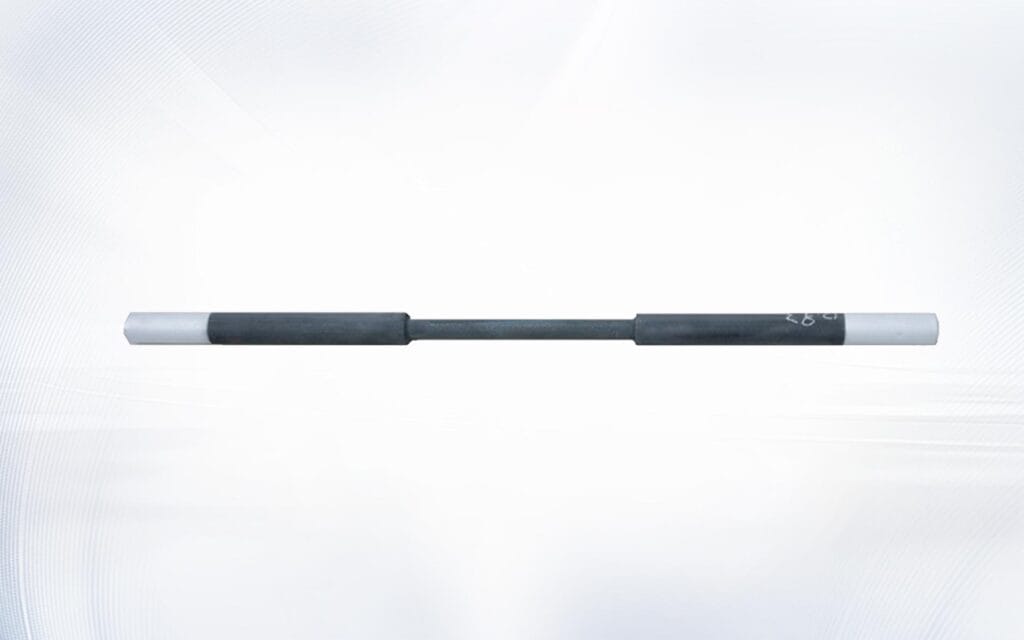
SiC heating elements come in various configurations to suit different furnace designs and heating requirements.
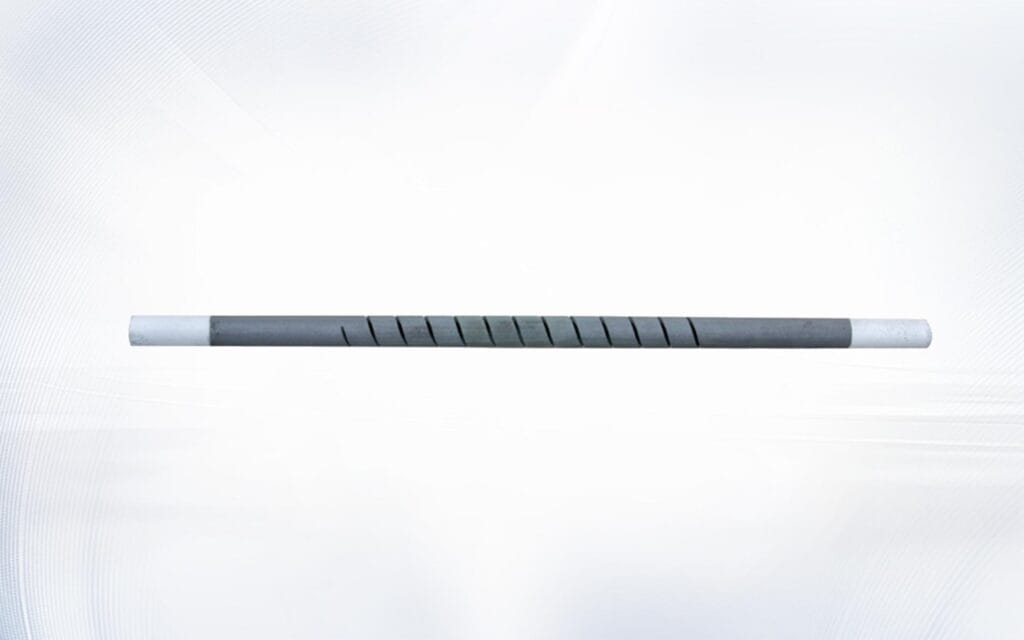
Straight Rod Type: The most common configuration, consisting of a central heating zone (hot zone) and two terminal sections (cold ends). Available in diameters from 8mm to 54mm with overall lengths from 300mm to 3000mm.
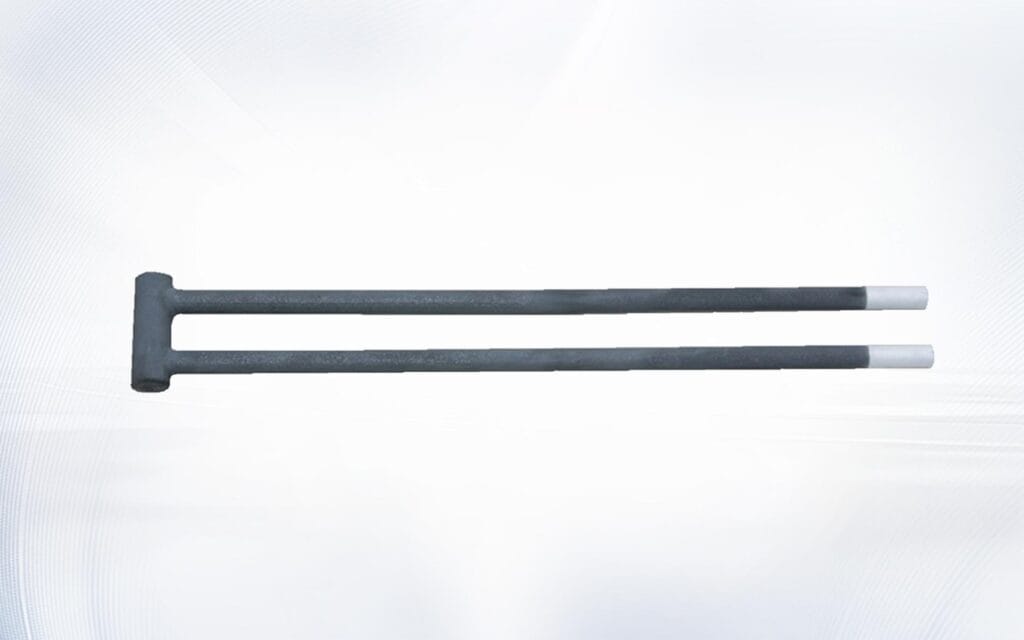
U-Type Elements: Formed by bending a single rod into U-shape, providing two parallel heating sections. This design simplifies installation and reduces cold end connections, popular in tunnel kilns and batch furnaces.
W-Type and Spiral Elements: Complex configurations for specialized applications requiring multiple heating zones or compact designs. Double-spiral elements offer increased power density in limited installation space.
Custom-Designed Elements: Tailored solutions for unique furnace geometries, unusual power requirements, or specific atmosphere conditions. Custom elements may include special diameters, non-standard lengths, or unique terminal configurations.
Standard vs Custom SiC Heating Rods
Standard elements suit most conventional furnace designs, offering immediate availability and competitive pricing. Custom elements become necessary when:
- Furnace dimensions don’t accommodate standard sizes
- Unusual power density requirements exist
- Special atmosphere resistance is needed
- Replacement elements for older furnaces require exact specifications
Application-Based Design Variations
Different applications require specific element characteristics:
- Ceramic kilns: Standard rod elements with protective glaze
- Glass furnaces: Elements with enhanced alkali resistance
- Semiconductor processing: High-purity elements with minimal contamination
- Metallurgical heat treatment: Elements designed for frequent cycling
Applications of SiC Heating Elements in Industrial Furnaces
Silicon carbide heating elements serve critical heating functions across diverse industries.
Ceramic Kiln Heating Systems: Ceramic sintering requires sustained temperatures between 1200-1450°C for extended periods. SiC elements provide uniform heating in tunnel kilns, roller kilns, and batch furnaces, ensuring consistent ceramic density and mechanical properties. For advanced ceramics like alumina or silicon nitride, precise temperature control within ±5°C prevents defects.
Glass Melting Furnaces: Glass production demands temperatures reaching 1400-1500°C to melt silica sand and other raw materials. SiC elements in forehearth channels and melting furnaces maintain uniform temperature profiles critical for glass quality. Optical glass manufacturing requires particularly precise temperature control to prevent bubbles and internal stress.
Metallurgical Heat Treatment Furnaces: Steel and non-ferrous metal heat treatment—annealing, normalizing, and tempering—relies on SiC elements for temperatures between 700-1200°C. The elements’ rapid heating capability and thermal shock resistance suit production environments with frequent temperature changes.
Laboratory and Research Furnaces: University and industrial research laboratories use SiC-heated furnaces for materials development, catalyst testing, and high-temperature experiments. The elements’ reliability and precise controllability ensure reproducible experimental conditions.
Semiconductor and Precision Heating Systems: Crystal growth, epitaxy, and doping processes in semiconductor manufacturing require temperatures between 1000-1400°C with exceptional uniformity and stability. SiC elements’ minimal contamination risk makes them suitable for cleanroom environments.
High-Temperature Continuous Furnace Applications
Continuous furnaces in ceramics and glass production operate 24/7 at temperatures exceeding 1300°C. SiC elements in these applications demonstrate longest service life when:
- Operating temperature remains below 1450°C
- Atmosphere is clean and oxidizing
- Power density stays within recommended limits (3-6 W/cm² depending on temperature)
- Thermal cycling is minimized
Batch Furnace vs Continuous Furnace Usage
Batch furnaces subject elements to frequent heating and cooling cycles, reducing service life compared to continuous operation. A SiC element lasting 2500 hours in continuous operation might achieve only 1500-2000 hours in batch processing. Proper power-up procedures and controlled cooling rates help extend element life in batch furnaces.
How to Choose the Right SiC Heater Element for Your Furnace
Element selection requires matching technical specifications to application requirements.
Operating Temperature Requirements: Determine the maximum process temperature and expected average operating temperature. Select elements rated for temperatures 100-150°C higher than maximum process temperature to ensure safety margin.
Voltage and Resistance Matching: Calculate required power based on furnace heat losses and production requirements. Element resistance determines current flow at given voltage. Work with manufacturers to specify appropriate resistance values that match your power supply capabilities.
Furnace Type Compatibility: Consider whether your furnace operates in batch or continuous mode, the number of heating zones, and element mounting configurations. U-type elements suit simpler installations; straight rods provide flexibility for zone control.
Diameter and Length Selection: Larger diameter elements offer greater power capacity and longer service life but require more installation space. Element length must accommodate furnace dimensions while providing adequate cold end length for terminal connections outside the hot zone.
Environmental Considerations: Evaluate furnace atmosphere composition:
- Air/Oxidizing: Standard elements perform excellently
- Hydrogen/Reducing: Special elements or protective coatings required, maximum temperature reduced
- Nitrogen: Moderate temperature de-rating necessary
- Water vapor: Minimize exposure or use enhanced protection
- Corrosive gases: Consult manufacturer for suitable element specifications
Common Selection Mistakes to Avoid
- Choosing maximum temperature without atmosphere consideration: A 1600°C-rated element may only reach 1200°C in hydrogen atmospheres
- Underestimating power density: Excessive watt density accelerates aging dramatically
- Mixing old and new elements: Resistance differences cause uneven heating and premature failure
- Ignoring cold end requirements: Insufficient cold end length leads to terminal overheating
- Neglecting maintenance planning: Budget for periodic resistance monitoring and element replacement
Technical Parameters Buyers Should Check
When evaluating SiC heating elements, verify:
- Nominal resistance at 1050°C (Ω)
- Maximum surface loading (W/cm²) at operating temperature
- Hot zone dimensions (diameter × length)
- Cold end length and terminal specifications
- Material grade and purity
- Applicable atmosphere and temperature limits
- Expected service life at specified operating conditions
SiC Heater Element Lifespan and Performance Factors
Service life represents a critical economic factor in heating element selection.
Temperature Effects: Lifespan decreases exponentially with increasing temperature. Elements operating at 1400°C typically last 2000-3000 hours; the same elements at 1450°C might achieve only 1000-1500 hours. Each 100°C temperature increase can reduce service life by 40-60%.
Electrical Loading: Surface loading (watt density) directly affects element surface temperature. Higher loading requires hotter element surfaces to transfer heat to the furnace, accelerating oxidation and aging. Follow manufacturer recommendations for maximum watt density at your operating temperature.
Atmosphere Effects: Furnace atmosphere profoundly impacts element life:
- Clean air: Optimal conditions, longest service life
- Hydrogen: Accelerated oxidation, reduced temperature limits
- Water vapor: Promotes rapid oxidation, requires protective measures
- Alkali/acidic vapors: Can react with SiC, causing rapid degradation
Operating Mode: Continuous operation extends service life compared to intermittent use. Each startup causes thermal stress and exposes fresh SiC to oxidation. Well-designed continuous furnaces achieve 20-30% longer element life than equivalent batch furnaces.
How to Extend Service Life in Industrial Use
Practical strategies for maximizing element life:
- Operate below maximum ratings: Maintaining temperatures 50-100°C below maximum extends life significantly
- Control heating rates: Limit heating rates to 5°C/min above 900°C to prevent thermal shock
- Ensure proper installation: Elements must move freely in mounting holes to accommodate thermal expansion
- Monitor resistance regularly: Track resistance increase; plan replacement when resistance reaches 3-4× initial value
- Replace elements in matched sets: Never mix elements with different resistance values in the same circuit
- Maintain clean furnace atmosphere: Remove process byproducts that could contaminate elements
- Use appropriate protective coatings: Special glazes enhance resistance to specific atmospheres
Failure Causes in SiC Heating Rods
Understanding failure modes helps prevent premature element loss:
- Gradual aging: Natural resistance increase through oxidation—the expected end-of-life mechanism
- Thermal shock cracking: Rapid temperature changes cause fracture, particularly during startup
- Overheating: Excessive power density or inadequate cooling causes local melting
- Contamination: Alkali metals, metal vapors, or other contaminants react with SiC
- Mechanical damage: Improper handling during installation or removal
- Electrical contact failure: Loose connections cause arcing and terminal damage
- Atmosphere attack: Reducing or corrosive gases degrade protective oxide layer
SiC Heater Element Price and Cost Considerations
Understanding pricing factors enables informed purchasing decisions.
Material Grade and Resistance Class: Higher purity silicon carbide and tighter resistance tolerances increase cost but deliver better performance and longer service life. Premium-grade elements may cost 20-30% more than standard grades but often provide 50% longer service life, reducing total cost of ownership.
Element Type and Complexity: Straight rod elements are most economical. U-type elements cost moderately more due to forming operations. Custom shapes and special configurations carry premium pricing reflecting engineering and tooling requirements.
Production Volume: Large orders benefit from manufacturing efficiencies and reduced setup costs. Wholesale pricing for bulk orders typically offers 15-25% savings compared to small-quantity purchases.
Custom Manufacturing: Custom elements require engineering review, possibly new tooling, and smaller production runs—all adding cost. However, custom elements precisely matched to your furnace optimize performance and may reduce total operating costs.
Factory Direct Pricing Advantages
Purchasing directly from manufacturers offers several benefits:
- Lower costs: Eliminating distributor margins saves 10-20% on pricing
- Technische Unterstützung: Direct access to engineering expertise for selection and troubleshooting
- Quality assurance: Confidence in authentic, warrantied products
- Customization capability: Direct communication enables tailored solutions
- Faster delivery: Streamlined ordering and production scheduling
Cost vs Performance Balance for Buyers
The total cost of Heizelemente includes:
- Purchase price: Initial acquisition cost
- Installation labor: Time and expertise required for element replacement
- Energy consumption: Older, high-resistance elements require more power
- Downtime costs: Production losses during element replacement
- Service life: Longer-lasting elements reduce replacement frequency
For continuous operation furnaces, slightly higher initial investment in premium elements typically delivers lower total cost over the element lifetime. Calculate total ownership cost rather than focusing solely on purchase price.
Why Choose a Professional SiC Heater Element Manufacturer
Selecting the right supplier impacts product quality, technical support, and long-term reliability.
Stable Production Capacity: Established manufacturers maintain consistent production capability, ensuring supply availability for replacement orders and expansion projects. Look for suppliers with dedicated silicon carbide production facilities rather than those sourcing from multiple unknown sub-suppliers.
Strict Quality Control Systems: Professional manufacturers implement ISO-certified quality management covering:
- Rohstoffprüfung
- Process parameter monitoring
- Finished product testing
- Traceability and documentation
OEM and Customization Capabilities: The ability to produce custom elements for unique applications demonstrates engineering competence and manufacturing flexibility. Request evidence of successful custom projects for applications similar to yours.
Global Export Experience: International customers require elements meeting global standards, proper packaging for long-distance shipping, and export documentation. Manufacturers with export experience understand these requirements and provide appropriate support.
Technical Support: Furnace heating system design involves complex technical considerations. Responsive technical support helps with element selection, installation guidance, troubleshooting, and performance optimization.
Factory Capability vs Trading Companies
Direct factory partnerships offer advantages over trading company intermediaries:
- Technische Fachkompetenz: Direct access to engineers who understand the manufacturing process
- Quality accountability: Clear responsibility for product quality and performance
- Customization: Engineering capability to develop tailored solutions
- Consistent quality: Single-source production ensures uniformity
- Better pricing: No intermediary markups
Importance of Technical Support in Furnace Projects
Heating system selection and optimization require technical collaboration:
- Application analysis: Understanding your specific furnace requirements
- Element specification: Matching technical parameters to process needs
- Installation guidance: Proper mounting and electrical connection methods
- Startup support: Commissioning procedures and power control setup
- Troubleshooting assistance: Rapid response to operational issues
Choose suppliers who provide comprehensive technical support, not just product delivery.
How to Order SiC Heating Elements from Our Factory
Our streamlined ordering process ensures you receive precisely the right elements for your application.
Inquiry and Specification Confirmation: Contact our technical team with your requirements:
- Furnace type and dimensions
- Operating temperature and atmosphere
- Power requirements
- Element mounting configuration
- Desired service life expectations
Our engineers review specifications and recommend optimal element configurations, sometimes suggesting alternatives that improve performance or reduce costs.
Custom Drawing and Technical Communication: For custom elements, we develop detailed drawings showing dimensions, tolerances, and electrical specifications. Technical discussions ensure complete understanding of requirements before production begins.
Production Lead Time: Standard elements typically ship within 2-3 weeks. Custom elements require 3-5 weeks depending on complexity. Rush orders may be accommodated for urgent replacement needs—contact us for availability.
Packaging and International Shipping: SiC elements receive careful packaging in protective containers with shock-absorbing materials to prevent damage during transport. We offer various shipping options including express, air freight, and sea freight to destinations worldwide.
OEM/ODM Service for Industrial Clients
We provide comprehensive OEM/ODM services:
- Private label branding with your company identification
- Custom packaging with your specifications
- Technical documentation in your preferred format
- Joint development of new element designs for specialized applications
Quality Assurance Before Shipment
Every order undergoes quality verification:
- Dimensional inspection against specifications
- Electrical testing at multiple temperature points
- Visual inspection for surface defects
- Documentation of test results
- Certificate of conformance for quality records
Schlussfolgerung
Siliziumkarbid Heizelemente represent the proven solution for industrial furnaces requiring reliable, high-temperature heating. Their exceptional temperature resistance, oxidation stability, and mechanical strength make them the preferred choice for ceramics, glass, metallurgy, and semiconductor applications worldwide.
As a professional SiC heater element manufacturer, we combine advanced production technology with comprehensive technical support to deliver heating solutions optimized for your specific furnace requirements. Whether you need standard straight rods for routine replacement or custom-designed elements for specialized applications, our engineering team works with you to ensure optimal performance and value.
Contact us today to discuss your heating element requirements. Our technical specialists are ready to help you select the right SiC heating elements for your furnace, optimize your heating system performance, and reduce your total operating costs.
FAQ
What is a SiC heater element?
A SiC heater element is a high-temperature heating component made from recrystallized silicon carbide. It converts electrical energy into heat through resistance and can operate at temperatures up to 1600°C, making it ideal for industrial furnaces in ceramics, glass, and metallurgical applications.
What temperature can SiC heating elements reach?
SiC heating elements can achieve maximum element temperatures of 1600°C in optimal conditions. However, for extended service life, recommended continuous operating temperature is 1450-1550°C in oxidizing atmospheres. Maximum temperature varies with furnace atmosphere—reducing atmospheres significantly lower temperature limits.
How long do SiC heating elements last?
Service life depends on operating conditions. At 1200-1400°C in clean air, SiC elements typically last 2000-3000 hours. Operating at 1450°C reduces life to 1000-1500 hours. Continuous operation extends life compared to batch processing, and proper maintenance can increase service life by 30-50%.
What industries use SiC heating elements?
Major industries include ceramics (kilns for sintering and firing), glass manufacturing (melting and forehearths), powder metallurgy (sintering furnaces), semiconductor production (crystal growth and processing), metallurgical heat treatment, and laboratory research. Any industry requiring sustained temperatures above 1200°C benefits from SiC heating technology.
Why choose SiC over metal heating wires?
SiC heating elements outperform metal heating wires (like Kanthal) in several key aspects: much higher temperature capability (1600°C vs 700°C), longer service life in high-temperature applications, better oxidation resistance, and superior performance in harsh atmospheres. While initial cost is higher, SiC elements provide better total cost of ownership for high-temperature applications.