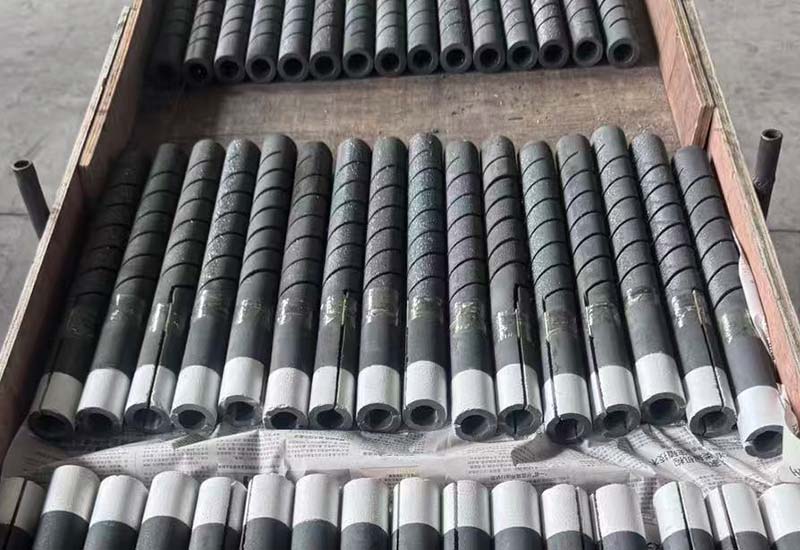
Choosing a pure silicon carbide rod for an industrial furnace is not as simple as matching a diameter and length from an old drawing. In real production environments, the performance of a varilla de carburo de silicio depends on temperature, furnace atmosphere, electrical parameters, installation structure, heating cycles, and the stability of the material itself.
For many furnace users, the real problem does not appear on the purchase order. It appears later: uneven heating, premature breakage, unstable resistance, loose terminals, frequent replacement, or a furnace that cannot maintain the required temperature as efficiently as expected.
That is why industrial buyers should not treat a pure silicon carbide rod as a standard consumable only. It is a functional high-temperature component. The right rod can support stable furnace operation, while the wrong specification may cause repeated downtime and unnecessary maintenance work.
This guide explains how to choose a pure silicon carbide rod from a practical manufacturing and application perspective. It is written for furnace manufacturers, ceramic kiln users, heat treatment plants, glass processing factories, maintenance engineers, and purchasing teams that need reliable SiC rods for high-temperature equipment.
Tabla de contenidos
The Real Role of a Pure Silicon Carbide Rod in a Furnace
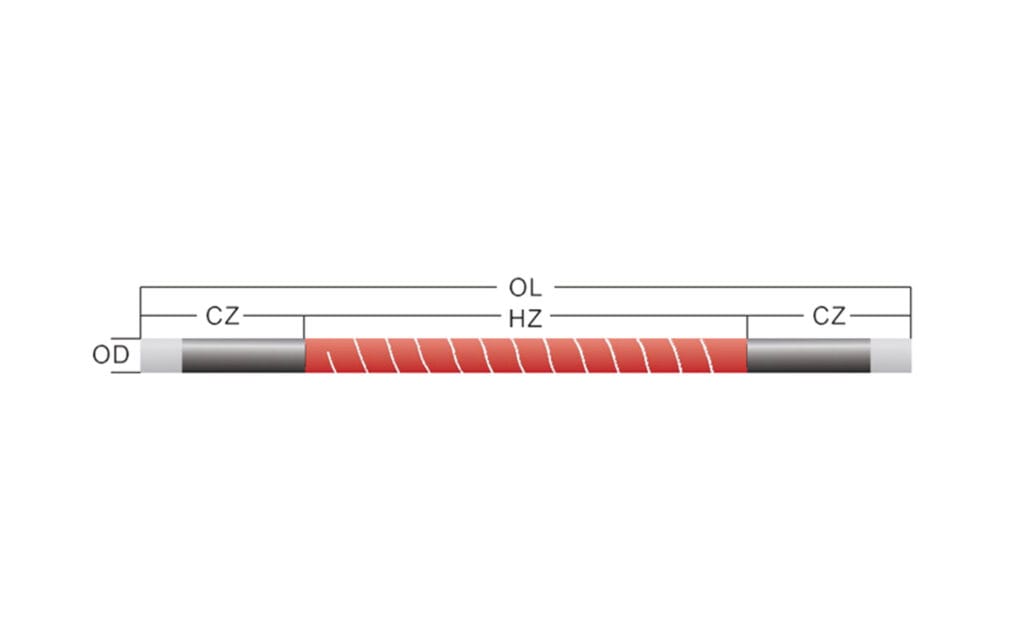
A pure silicon carbide rod is a high-temperature ceramic component made from silicon carbide material. In furnace systems, it is commonly used as a silicon carbide heating rod, SiC heating element, or high-temperature structural rod, depending on the product design and application.
In many industrial furnaces, the rod is expected to do more than simply withstand heat. It must provide stable thermal performance, resist oxidation, maintain mechanical strength, and remain dimensionally reliable under repeated heating and cooling cycles.
For buyers, this means the selection should start with the actual working condition, not just the product name.
A pure varilla de carburo de silicio may be used in:
| Application Area | Common Requirement |
|---|---|
| Industrial electric furnaces | Stable heating and long operating cycles |
| Hornos cerámicos | Uniform heat distribution and thermal shock resistance |
| Hornos de tratamiento térmico | Reliable temperature control |
| Glass processing equipment | High-temperature stability |
| Metallurgy furnaces | Strength under severe furnace conditions |
| Hornos de laboratorio | Accurate and repeatable heating performance |
| Sintering furnaces | Clean and consistent thermal operation |
The same product category may serve different roles in different equipment. A pure silicon carbide rod for a ceramic kiln may not have the same specification priorities as a SiC rod used in a heat treatment furnace. This is why a serious buyer should evaluate the rod by application, not only by material name.
Why Industrial Buyers Prefer Silicon Carbide Rods for High-Temperature Use
Silicon carbide is valued in high-temperature systems because it offers a strong combination of thermal stability, wear resistance, oxidation resistance, and mechanical strength. In furnace applications, these properties make silicon carbide rods suitable for demanding environments where metal components may soften, deform, or oxidize too quickly.
For industrial buyers, the main benefits include:
| Propiedad | Why It Matters in Furnace Operation |
|---|---|
| Resistencia a altas temperaturas | Helps the rod work under intense furnace heat |
| Conductividad térmica | Supports heat transfer and temperature response |
| Thermal shock resistance | Reduces the risk of cracking during temperature changes |
| Oxidation resistance | Helps maintain performance in many high-temperature atmospheres |
| Resistencia mecánica | Reduces damage during installation and operation |
| Chemical stability | Useful in selected furnace and processing environments |
A high purity silicon carbide rod can be especially valuable when the buyer needs better material consistency, more stable performance, and cleaner operation in demanding high-temperature equipment.
However, material quality is only one part of the decision. A good rod can still fail early if the furnace design, installation, or electrical parameters are wrong.
Start With the Furnace, Not the Rod
One of the most common buying mistakes is starting with the rod size instead of the furnace condition.
A buyer may say:
“We need a silicon carbide rod, 25 mm diameter, 600 mm length.”
That information is useful, but it is not enough.
A manufacturer should also know:
| Information Needed | Reason |
|---|---|
| Furnace type | Different furnace structures require different rod designs |
| Working temperature | Affects material choice and service life |
| Furnace atmosphere | Oxidizing, reducing, or special atmospheres can affect performance |
| Heating cycle | Continuous heating and frequent cycling create different stress |
| Installation method | Poor support or tight mounting may cause breakage |
| Voltage and resistance | Must match the electrical control system |
| Hot zone length | Determines effective heating area |
| Cold end length | Affects connection safety and heat loss |
| Replacement or new project | Replacement rods must match existing furnace conditions |
A pure varilla de carburo de silicio should be selected as part of the heating system, not as an isolated part. When the rod, furnace chamber, control system, and mounting structure are not matched, the result is often unstable heating or shorter service life.
Key Specifications That Should Never Be Ignored
Many product pages list diameter and length, but industrial buyers need to look deeper. The most important specifications are not always the most visible ones.
Diámetro
The diameter affects mechanical strength, surface load, heating behavior, and installation space. A larger diameter may provide higher strength, but it must still fit the furnace structure and electrical design. A smaller diameter may be easier to install in compact equipment, but it may not be suitable for every heating load.
Total Length
Total length must match the furnace chamber width, wall thickness, and external connection area. If the rod is too short, it may not install safely. If it is too long, it may create stress or connection problems.
Longitud de la zona caliente
The hot zone is the effective heating section inside the furnace. This is one of the most important dimensions for a silicon carbide heating rod. If the hot zone is too short, the furnace may not heat evenly. If it is too long, heat may be generated in an unsuitable area.
Longitud del extremo frío
The cold end connects the heating rod to the power system. It must match the furnace wall and terminal structure. Poor cold end design can lead to overheating around the connection area, unstable contact, or unnecessary heat loss.
Resistance
Resistance must match the furnace’s electrical control system. If resistance is not correctly selected, the rod may not reach the expected heating performance, or the furnace may become difficult to control.
Power Load
Power design should be based on furnace size, target temperature, heating speed, load material, and thermal insulation. Choosing a rod without confirming power conditions can create long-term operating problems.
Furnace Atmosphere
The atmosphere inside the furnace affects oxidation, aging, and service behavior. A rod that works well in one atmosphere may not perform the same way in another.
A Practical Selection Table for Buyers
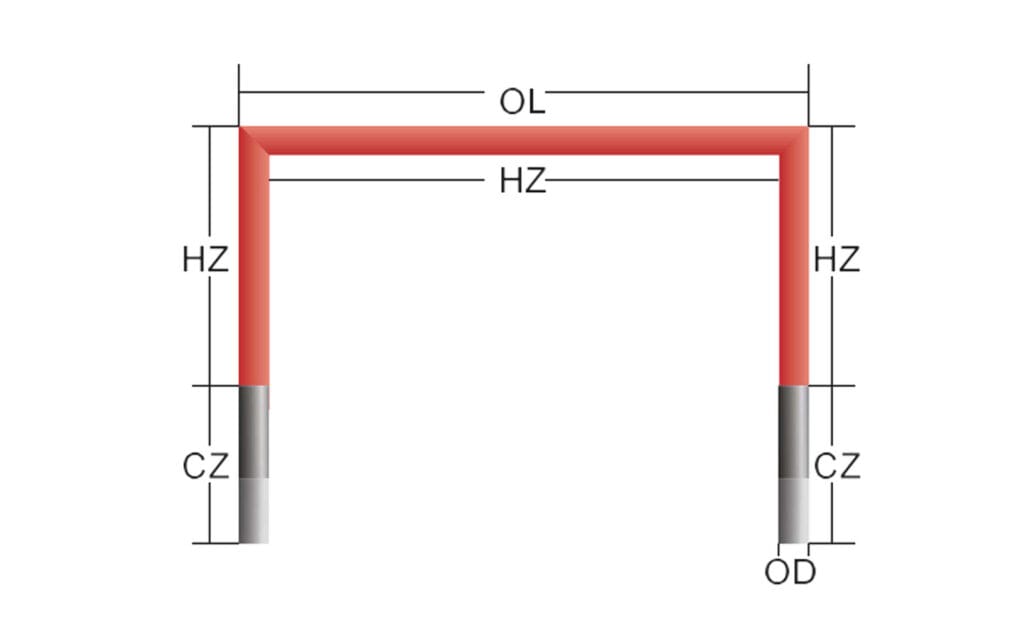
Before placing an order for a pure silicon carbide rod, buyers can use the following table to organize the technical details.
| Factor de selección | What to Confirm | Why It Matters |
|---|---|---|
| Product type | Straight, U-type, W-type, custom design | Determines installation and heating structure |
| Diámetro | Exact rod diameter | Affects strength and heating behavior |
| Total length | Overall rod length | Must match furnace width and mounting space |
| Hot zone length | Heating section length | Controls effective heating area |
| Cold end length | Non-heating section length | Affects terminal connection and safety |
| Resistance | Required resistance value | Must match electrical system |
| Voltage | Furnace power supply | Prevents mismatch with control equipment |
| Furnace temperature | Actual working temperature | Determines suitable rod design |
| Atmosphere | Air, reducing, inert, or other conditions | Influences oxidation and aging |
| Cantidad | Single piece or batch order | Helps control consistency |
| Drawing/sample | Available or not | Reduces communication errors |
This type of technical confirmation is especially important for replacement projects. Old furnaces often have custom structures, modified wiring, or operating conditions that are not shown clearly on the original equipment nameplate.
Pure Silicon Carbide Rod vs Standard Silicon Carbide Rod
Not every silicon carbide rod is made for the same level of performance. A pure silicon carbide rod, or high purity silicon carbide rod, is usually selected when the application requires better material consistency, cleaner operation, and more reliable high-temperature behavior.
The difference is not only about material purity. It is also about how stable the rod is during actual use.
| Comparison Point | Pure Silicon Carbide Rod | Standard Silicon Carbide Rod |
|---|---|---|
| Material consistency | Usually more controlled | May vary by grade and process |
| High-temperature behavior | More suitable for demanding applications | Suitable for general use depending on grade |
| Application focus | Industrial furnaces, kilns, precision heating systems | Standard furnace or ceramic applications |
| Custom options | Often required for industrial buyers | May be limited to common sizes |
| Buyer priority | Stability, performance, service support | Basic function and availability |
For demanding furnace applications, the lowest initial purchasing cost is rarely the best selection standard. A more reliable rod can reduce replacement frequency, improve heating consistency, and help protect production schedules.
Common Furnace Applications and Their Selection Priorities
A pure silicon carbide rod may be used in many high-temperature systems, but each application has a different priority.
Industrial Electric Furnaces
Industrial electric furnaces usually require stable heating, predictable resistance behavior, and safe connection design. Buyers should pay attention to rod type, resistance, power load, hot zone layout, and installation clearance.
Ceramic Kilns
Ceramic kilns often involve repeated heating and cooling. Thermal shock resistance and heating uniformity are important. The rod should be selected according to kiln size, firing temperature, load distribution, and installation direction.
Glass Processing Furnaces
Glass-related heating environments may require stable high-temperature performance and clean heating conditions. The buyer should confirm furnace atmosphere, working temperature, and whether the rod will be exposed to vapors or process contamination.
Heat Treatment Furnaces
Heat treatment equipment often needs accurate and repeatable temperature control. Resistance, power design, and heating zone arrangement are important. If multiple rods are used in one furnace, consistency between rods should be considered.
Sintering Furnaces
Sintering applications usually require steady heat and controlled furnace conditions. The buyer should confirm whether the process involves special atmosphere, long holding time, or frequent temperature changes.
Types of Silicon Carbide Rods Used in Furnace Systems
A buyer may search for “pure varilla de carburo de silicio,” but the correct product type may vary depending on the furnace design.
Straight Silicon Carbide Rod
A straight silicon carbide rod is widely used in many electric furnaces and kiln systems. It is simple in structure and suitable for common heating layouts. Buyers should confirm the hot zone, cold ends, and terminal design before ordering.
U-Type Silicon Carbide Heating Rod
A U-type silicon carbide heating rod is often used when the furnace structure requires both terminals on one side. This design may simplify installation in certain equipment, but the dimensions must be accurately matched.
W-Type Silicon Carbide Heating Rod
A W-type design may be used where more heating area is required in a limited space. It should be selected carefully according to furnace structure and support requirements.
Dumbbell-Type Silicon Carbide Rod
This type is used in certain traditional furnace heating systems. Buyers should provide old samples, drawings, or complete dimensions when replacing this style.
Custom Silicon Carbide Rod
A custom silicon carbide rod is often the best option for non-standard furnaces, OEM furnace production, special voltage requirements, or replacement projects where the original part is no longer easy to source.
Why Silicon Carbide Rods Fail Earlier Than Expected
Early failure is not always caused by poor material. In many cases, the rod is damaged by incorrect selection, installation, or operation.
Cauzele comune includ:
| Failure Cause | What Happens |
|---|---|
| Incorrect resistance | Furnace cannot control heating correctly |
| Too much surface load | Rod overheats and ages faster |
| Poor installation clearance | Expansion stress causes cracking |
| Tight clamping | Mechanical stress damages the rod |
| Unstable electrical connection | Terminals overheat or loosen |
| Aggressive atmosphere | Oxidation or corrosion accelerates aging |
| Rapid temperature cycling | Thermal shock increases cracking risk |
| Mixing old and new rods incorrectly | Uneven resistance causes uneven heating |
| Wrong hot zone length | Heating occurs in the wrong area |
A pure silicon carbide rod should be installed with enough space for thermal expansion. The rod should not be forced, bent, clamped too tightly, or placed under mechanical tension. Even a high-quality SiC rod can break if it cannot expand naturally during heating.
How to Extend the Service Life of a Silicon Carbide Rod
Service life depends on material quality, furnace conditions, and operating habits. Buyers can improve performance by managing the following points.
Match the Rod to the Real Working Temperature
Do not select a rod only by maximum temperature claims. The actual working temperature, holding time, heating cycle, and furnace atmosphere are more important.
Avoid Overloading the Rod
Excessive surface load can shorten service life. The power design should match the furnace volume, insulation condition, and heating target.
Keep Terminals Stable
Loose connections may cause terminal overheating. Terminals should be checked during maintenance, especially after repeated heating cycles.
Allow Thermal Expansion
The rod should not be installed under pressure. There should be enough clearance for expansion and contraction.
Avoid Unnecessary Rapid Cooling
Fast temperature changes may increase thermal stress. If the production process allows, controlled heating and cooling can help reduce cracking risk.
Replace Rods in Groups When Needed
In some furnace systems, replacing only one rod in a group may create uneven heating because old rods and new rods may have different resistance behavior. The replacement method should be decided based on the furnace design and electrical layout.
What Buyers Should Ask Before Ordering
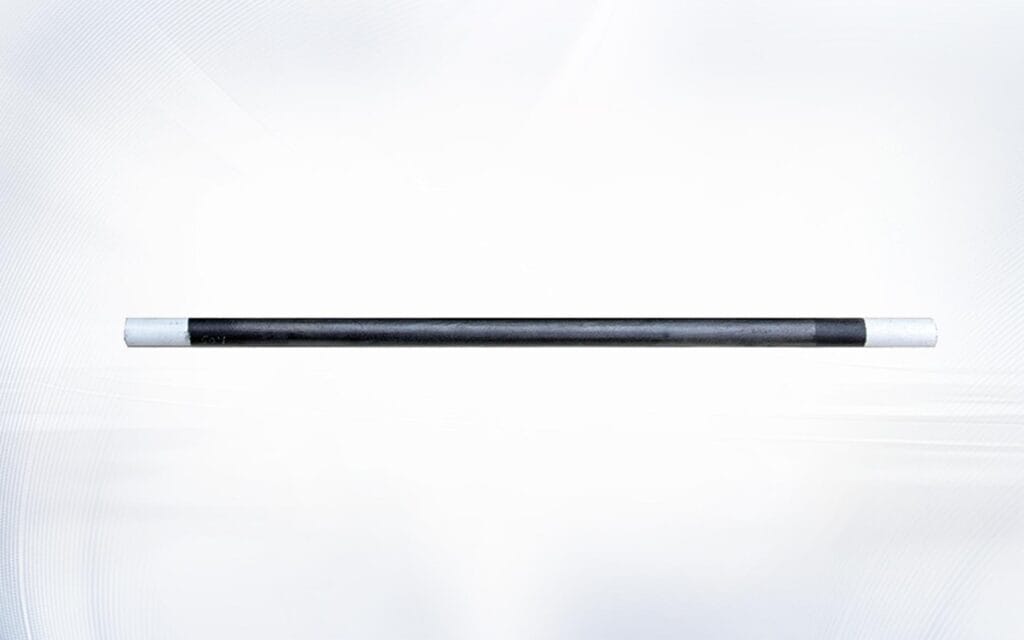
A serious supplier should not only ask, “What size do you need?” A professional pure silicon carbide rod manufacturer should help confirm the working conditions first.
Before ordering, buyers should prepare answers to these questions:
| Question | Why It Is Important |
|---|---|
| What type of furnace is it used in? | Determines rod design and material requirement |
| What is the working temperature? | Affects service life and rod selection |
| What is the furnace atmosphere? | Influences oxidation and stability |
| What are the diameter and total length? | Basic production dimensions |
| What is the hot zone length? | Controls effective heating area |
| What is the cold end length? | Affects connection and installation |
| What voltage and resistance are required? | Must match the control system |
| Is it a new installation or replacement? | Replacement requires stricter matching |
| How many rods are used in one furnace? | Affects consistency and heating balance |
| Can you provide a drawing or sample? | Reduces specification errors |
This information allows the manufacturer to recommend a suitable varilla de carburo de silicio instead of simply producing a part that looks similar but performs differently.
When Custom Pure Silicon Carbide Rods Make More Sense
Standard sizes are suitable for many common furnaces, but custom rods are often necessary in industrial projects.
You may need a custom pure silicon carbide rod when:
Your furnace uses a non-standard chamber size.
The original rod is difficult to source.
The hot zone length is different from standard products.
The furnace requires a special resistance value.
The cold end structure must match existing terminals.
The equipment is designed for OEM production.
The application involves specific atmosphere or heating cycles.
You need batch consistency for multiple furnaces.
You are upgrading old furnace heating parts.
You want to reduce installation mismatch.
For manufacturers and equipment builders, customization is not only about dimensions. It is also about matching the rod to the furnace’s electrical and thermal design.
How to Evaluate a Silicon Carbide Rod Manufacturer
A reliable manufacturer should provide more than a product list. Industrial buyers need technical communication, stable production, and specification confirmation.
When evaluating a pure silicon carbide rod manufacturer, buyers should consider:
Technical Understanding
The manufacturer should understand furnace temperature, resistance, hot zone, cold end, installation structure, and application requirements.
Custom Production Ability
If your project needs a non-standard size or special design, the manufacturer should be able to produce according to drawings, samples, or confirmed specifications.
Material Consistency
Stable material quality helps improve performance consistency, especially for batch orders and multi-rod furnace systems.
Clear Specification Confirmation
Before production, all key dimensions and electrical parameters should be confirmed in writing.
Export Packaging
Silicon carbide rods are ceramic components and can be damaged by impact. Proper packaging is important for long-distance transport.
After-Sales Technical Support
If the buyer is replacing old rods or solving heating problems, support from the manufacturer can reduce trial-and-error costs.
A Better Way to Send an Inquiry
A vague inquiry often leads to a vague quotation. If you want accurate technical feedback, provide complete information from the beginning.
A strong inquiry should include:
Product type: straight, U-type, W-type, dumbbell, or custom
Diámetro
Total length
Hot zone length
Cold end length
Resistance value
Voltage and power
Working temperature
Furnace atmosphere
Application industry
Cantidad
Drawing or sample photos
Whether it is for new equipment or replacement
Here is a simple inquiry template buyers can use:
“We need a pure silicon carbide rod for an industrial furnace. The working temperature is ___, the furnace atmosphere is ___, and the required rod size is ___. The hot zone length is ___, the cold end length is ___, resistance is ___, and voltage is ___. This is for replacement/new furnace production. Quantity is ___. Please help confirm whether this specification is suitable.”
This type of inquiry helps the manufacturer respond with a more accurate recommendation and reduces the chance of receiving an unsuitable rod.
Buyer Mistakes That Can Be Avoided
Many purchasing problems come from incomplete information rather than bad intentions. The following mistakes are common and avoidable.
Buying Only by Size
Diameter and length are not enough. Resistance, hot zone, voltage, furnace atmosphere, and installation structure are equally important.
Ignoring the Hot Zone
The hot zone determines where heat is generated. A wrong hot zone can lead to uneven heating or damage near the furnace wall.
Treating All SiC Rods as the Same
Different silicon carbide rods may have different material quality, manufacturing methods, and application suitability.
Not Checking the Existing Furnace Condition
Old furnaces may have modified wiring, worn terminals, changed insulation, or uneven heating zones.
Replacing Without Comparing Resistance
Resistance mismatch can cause uneven current distribution and poor heating balance.
Choosing a Supplier Without Technical Confirmation
A supplier that only sells by size may not help you avoid application problems. For industrial use, technical confirmation is part of product quality.
Practical Selection Scenario
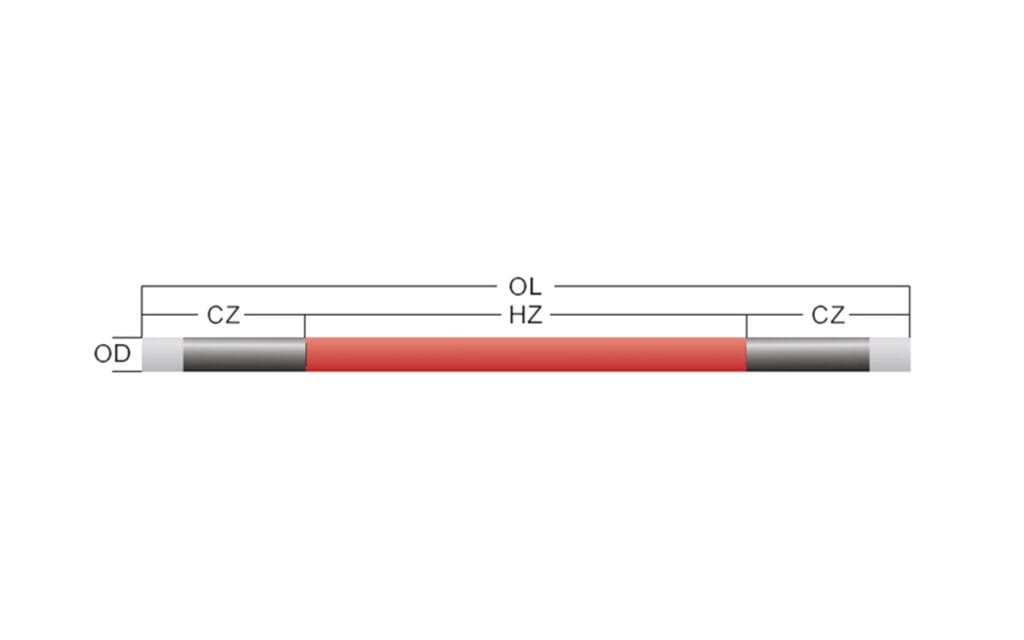
Imagine a buyer needs a pure varilla de carburo de silicio for an electric furnace used in ceramic production. The old rod broke after repeated heating cycles. The buyer knows the length and diameter but does not know the resistance value or hot zone length.
A basic seller may quote based only on the dimensions.
A manufacturer should ask more questions:
Where is the rod installed?
What is the working temperature?
How many rods are used in one group?
Is the rod straight or U-type?
What is the heated section length?
Are there signs of terminal overheating?
Did the rod break in the hot zone or near the support area?
Was the furnace recently modified?
These questions help identify whether the failure was caused by material aging, wrong installation, excessive surface load, electrical imbalance, or thermal shock. This is the difference between selling a rod and solving a furnace problem.
Conclusión
Choosing a pure varilla de carburo de silicio for an industrial furnace requires more than confirming a product name. The right SiC rod must match the furnace temperature, atmosphere, heating zone, resistance, voltage, installation structure, and operating cycle.
For buyers, the most important step is to provide complete working conditions before ordering. For manufacturers, the responsibility is to help confirm whether the selected rod is suitable for the actual application.
A well-matched pure silicon carbide rod can support stable furnace heating, reduce unnecessary replacement, and improve long-term operation reliability. Whether you need a standard silicon carbide rod, a silicon carbide heating rod, or a custom SiC rod for a special furnace project, accurate specification confirmation is the key to better performance.
If you are replacing existing furnace rods or developing new high-temperature equipment, send your drawings, dimensions, working temperature, resistance requirements, and application details to the manufacturer for technical confirmation before production.
Preguntas frecuentes
What is a pure silicon carbide rod used for?
A pure silicon carbide rod is used in industrial furnaces, ceramic kilns, heat treatment equipment, glass processing systems, metallurgy furnaces, and other high-temperature applications.
Is a pure silicon carbide rod the same as a silicon carbide heating rod?
Not always. A pure silicon carbide rod may refer to a high-temperature ceramic rod, while a silicon carbide heating rod usually refers to a SiC heating element used for electric furnace heating. The exact meaning depends on product design and application.
How do I choose the right silicon carbide rod size?
You should confirm the diameter, total length, hot zone length, cold end length, resistance, voltage, working temperature, furnace atmosphere, and installation method.
Can varillas de carburo de silicio be customized?
Yes. Custom silicon carbide rods can be produced based on drawings, samples, furnace structure, resistance requirements, hot zone length, and application conditions.
Why do silicon carbide rods break?
Breakage may be caused by thermal shock, tight installation, mechanical stress, incorrect resistance, excessive surface load, poor terminal connection, or unsuitable furnace conditions.
Should old and new silicon carbide rods be used together?
It depends on the furnace design and resistance condition. In some systems, mixing old and new rods may cause uneven heating. Buyers should check resistance balance before replacement.
What information should I provide when requesting a quotation?
Provide the rod type, diameter, total length, hot zone length, cold end length, resistance, voltage, working temperature, furnace atmosphere, quantity, and drawings or sample photos if available.