Two SiC elements can have identical dimensions and still divide furnace power differently. In a series string, resistance determines each element’s voltage and power share. In parallel branches, resistance determines branch current. SiC heating element resistance matching is therefore an electrical grouping task, not a visual sorting exercise.
This guide explains how to measure, calculate, group, replace, and document elements using SiC heating element resistance matching. It is written for furnace engineers, maintenance teams, and technical buyers who need stable branch power and a traceable replacement plan.
Define resistance at a stated condition
A resistance number without a method or reference condition is incomplete. Temperature, instrument method, contact arrangement, and element service history can affect the value. A SiC heating element resistance matching record should state whether values are supplier-rated, measured cold, measured under another approved condition, or calculated from operating voltage and current.
- Use the same approved method for every element in the comparison.
- Record units, instrument, date, temperature condition, and operator.
- Identify each element by furnace position or permanent tag.
- Keep supplier-rated and plant-measured values in separate fields.
- Do not compare an individual element value with a complete branch value.
The NIST electrical SI units overview provides relationships among volts, amperes, watts, and ohms. Consistent units and boundaries are fundamental to SiC heating element resistance matching.
Understand the effect in a series string
Elements in series carry the same current. The voltage across each element is V = I × R, and its power is P = I²R. A higher-resistance element in the same string therefore receives more voltage and produces more power than a lower-resistance element. SiC heating element resistance matching limits this imbalance.
Consider an illustrative two-element string with 5 Ω and 7 Ω elements at 120 V total. String resistance is 12 Ω, so current is 10 A. The 5 Ω element receives 50 V and produces 500 W; the 7 Ω element receives 70 V and produces 700 W. The string delivers 1,200 W, but the individual elements are not equally loaded.
This example is not a recommended rating. It demonstrates why total string power can look correct while one element runs harder. The approved SiC heating element resistance matching range must come from the supplier and furnace design.
Understand the effect in parallel branches
Parallel branches share the same voltage. Branch current is I = V/R, and branch power is P = V²/R. A lower-resistance branch draws more current and produces more power at the same voltage. SiC heating element resistance matching should compare total resistance of each branch, not just one element selected from it.
At 120 V, a 12 Ω branch draws 10 A and produces 1,200 W, while a 15 Ω branch draws 8 A and produces 960 W. Both can be electrically continuous, yet their heating contribution differs. Branch-current measurements during commissioning can verify the intended SiC heating element resistance matching pattern.
Use the SiC current calculation guide to trace element, branch, and total secondary current. Keep voltage, controller state, transformer tap, and temperature condition with every measurement.
Group a series-parallel zone branch by branch
In a series-parallel zone, first build acceptable series strings, then compare total string resistance before connecting those strings in parallel. This two-level SiC heating element resistance matching process controls power division within each string and current balance among branches.
| Grouping level | Calculate | Verify |
|---|---|---|
| Individual element | Approved resistance value and deviation | Method, reference condition, identity, dimensions |
| Series string | Sum of element resistances | Individual voltage and power distribution |
| Parallel branches | Each string’s total resistance | Branch current and power balance |
| Complete zone | Total equivalent resistance, current, and power | Transformer and controller range |
| Later-life check | Approved higher-resistance condition | Voltage reserve and regrouping strategy |
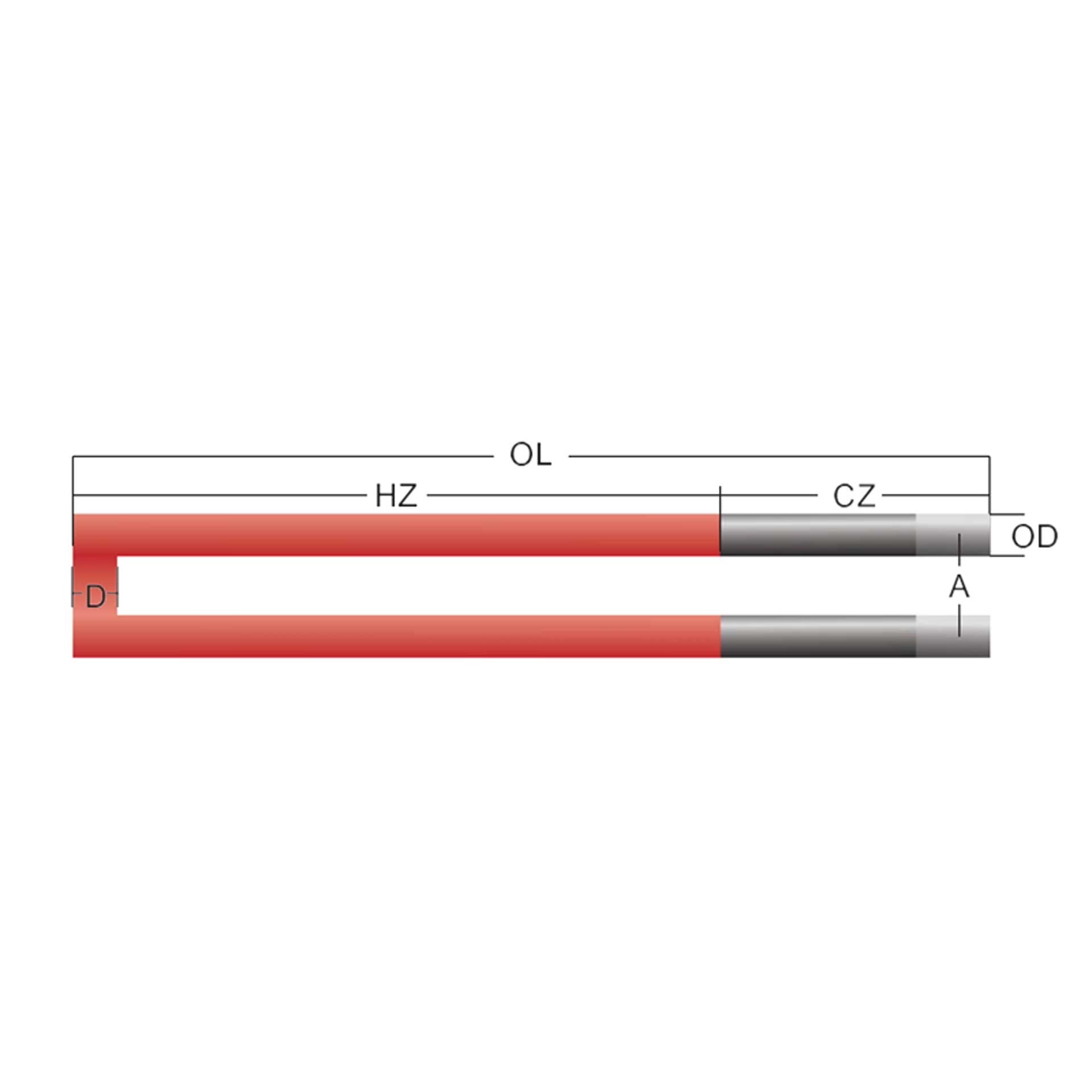
Mark element positions and branch numbers on the SiC wiring diagram. A spreadsheet without physical positions cannot guide installation or later SiC heating element resistance matching.
Set matching limits from the approved design
Do not invent one universal percentage. Acceptable difference depends on element design, circuit arrangement, surface loading, furnace temperature, controller range, zone uniformity requirement, and supplier specification. SiC heating element resistance matching limits should be stated on the purchase and installation records.
Define whether the tolerance applies to individual elements within one series string, total branch resistance across parallel strings, or both. Also define the reference condition and rounding rule. A clear limit prevents selective interpretation when the available stock is inconvenient.
NIST Technical Note 1297 explains general principles for expressing measurement uncertainty. Apply a suitable method so SiC heating element resistance matching decisions do not treat instrument noise as a real difference.
Account for new and aged elements
Resistance changes during service. A new replacement may be dimensionally correct but electrically different from elements that have operated for many cycles. Before mixing ages, compare actual values, circuit position, available voltage range, and the approved maintenance strategy.
Some systems permit regrouping; others require a matched string or larger replacement set. SiC heating element resistance matching should determine the replacement scope before the furnace is opened. The SiC replacement warning-sign guide explains how resistance, voltage reserve, condition, and process performance support that decision.
Do not move elements between zones without updating position history. Different temperature, atmosphere, loading, and power history can cause resistance to develop differently, which matters for future SiC heating element resistance matching.
Measure and label replacements before installation
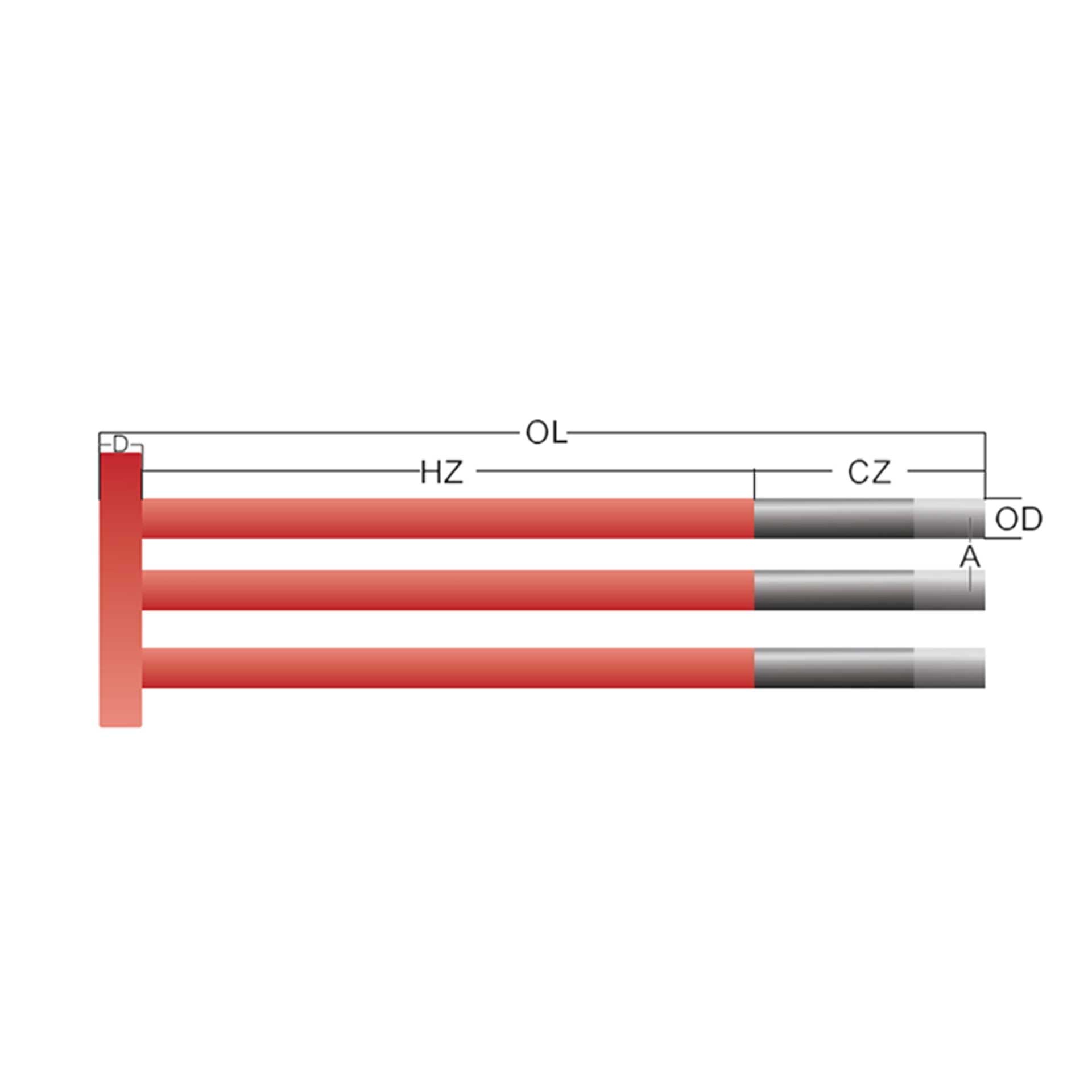
At receipt, verify part number, drawing, dimensions, quantity, visible condition, resistance identification, and documentation. Measure only with the approved method and suitable support. Record the supplier value and plant verification separately in the SiC heating element resistance matching sheet.
Assign each element to a string, branch, and physical position before it enters the furnace. Use durable identification that does not damage the element or create contamination. The installation team should not improvise grouping from carton order.
If measured values conflict with the certificate or approved range, quarantine the element and resolve the method, reference condition, identity, and instrument before installation. Never adjust a recorded number merely to pass SiC heating element resistance matching.
Verify matching during staged startup
Before energization, trace the as-built circuit, verify element positions, check connections, and confirm transformer and controller settings. During staged power, qualified personnel should record secondary voltage and branch current at comparable conditions. SiC heating element resistance matching is supported when calculated and measured branch behaviour agree within the approved criteria.
Investigate a current difference before increasing voltage. Possible causes include incorrect grouping, loose connections, an open element, different branch temperature, instrument timing, or a wiring error. Do not reassign elements until the actual cause is known.
For U.S. servicing work, follow OSHA’s control of hazardous energy standard and site procedures. Safe isolation is required before changing SiC heating element resistance matching groups or connections.
Maintain a resistance and position history
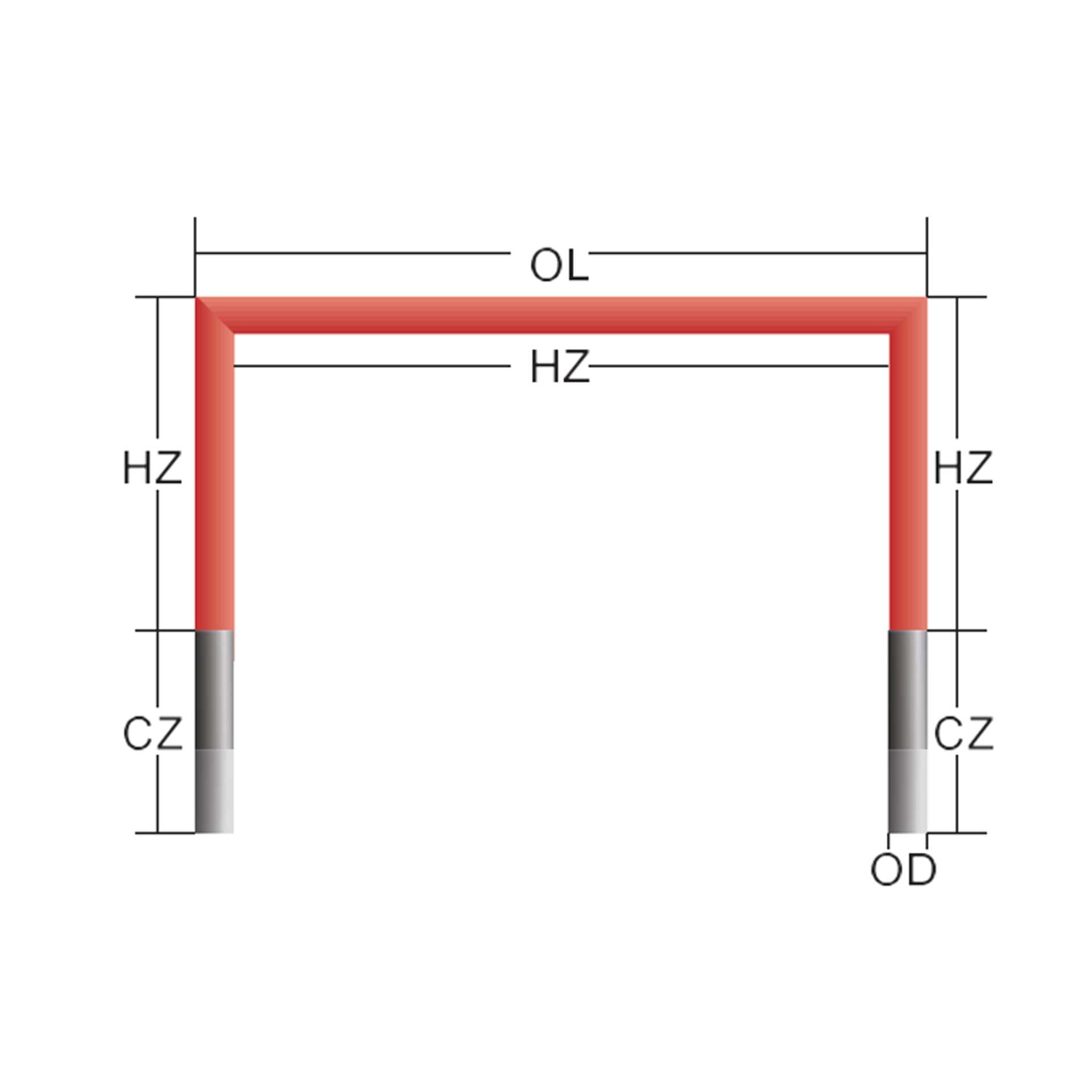
Keep original value, measurement method, installation position, string and branch, date, transformer tap, operating voltage and current, later measurements, regrouping, removal reason, and final disposition. This history lets maintenance plan SiC heating element resistance matching before a shutdown.
Trend values only at comparable conditions. A calculated hot operating resistance and a cold bench measurement are not interchangeable. Preserve formulas and raw measurements so another reviewer can reproduce the decision.
The IEC 60519-1 overview identifies the scope of general safety requirements for industrial electroheating installations. Applicable standards, furnace design, and qualified engineering govern the complete system in which SiC heating element resistance matching is applied.
Frequently asked questions
Why must series elements have similar resistance?
They carry the same current, so a higher-resistance element receives more voltage and power. SiC heating element resistance matching limits that distribution difference.
What should be matched in parallel branches?
Compare the total resistance of each complete branch. Branches at the same voltage draw different current when their total resistance differs.
Can new and aged elements be grouped together?
Only if measured values, circuit design, voltage range, and the approved SiC heating element resistance matching strategy support the combination.
Is cold resistance enough to predict operating balance?
Use the supplier’s specified method and operating design data. Cold measurements can support grouping, but commissioning current and voltage provide an important cross-check.
What information should be included in an RFQ?
Provide the element drawing, resistance value and reference condition, tolerance and grouping requirement, circuit, transformer range, power, temperature, atmosphere, cycle, quantity, and existing element history.
Match the electrical group, not only the dimensions
Reliable grouping starts with comparable measurements, continues through series and parallel calculations, and ends with staged startup data and position history. Treating those steps as one SiC heating element resistance matching process helps keep branch power stable and replacement decisions traceable.
For a new furnace or replacement group, contact Qixiang Material with the element drawing, required resistance and reference condition, circuit, transformer range, temperature, atmosphere, cycle, existing measurements, and quantity. The team can discuss suitable SiC elements while the responsible engineers approve the grouping and complete electrical system.