Table of Contents
Introduction
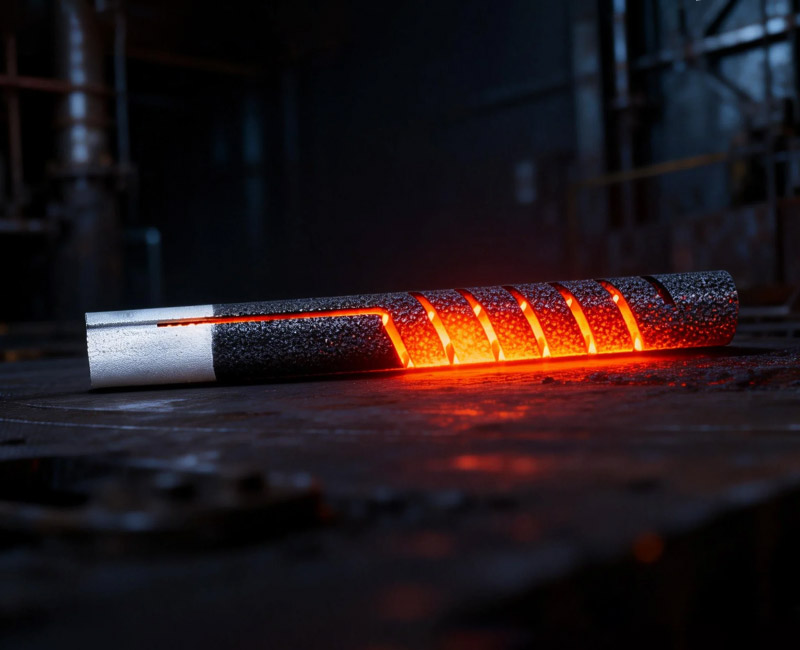
A broken heating rod makes the need for replacement obvious. The more difficult decision arises when the rod is still physically intact but the furnace heats more slowly, temperature uniformity deteriorates, or the control system requires increasingly aggressive power adjustments.
In these situations, silicon carbide heating rod replacement should not begin with removing the first rod that looks damaged. It should begin with diagnosing the entire heating zone.
Silicon carbide heating rods gradually change during high-temperature operation. Their resistance can increase, terminal connections can deteriorate, surface contamination can accelerate aging, and rods installed in different positions may age at different rates. Replacing one rod without considering these differences can create a new imbalance rather than restore furnace performance.
This article explains when a single-rod replacement is appropriate, when an entire zone should be replaced, what measurements should be recorded, and how to prevent new and aged rods from operating poorly together.
For available rod structures, dimensions, and installation options, review Qixiang’s range of silicon carbide heating elements.
What Determines the Service Life of a Silicon Carbide Heating Rod?
There is no universal operating-hour figure that accurately predicts the life of every silicon carbide heating rod. Service life depends on the interaction between the element, furnace, process, and maintenance practices.
The most influential factors include:
- Normal working temperature
- Maximum operating temperature
- Number of heating and cooling cycles
- Furnace atmosphere
- Electrical loading
- Element surface temperature
- Product loading pattern
- Terminal connection quality
- Mechanical installation
- Process dust, vapor, or chemical contamination
- Frequency of furnace door opening
- Resistance matching within the heating zone
A rod operating continuously under stable conditions may age differently from an identical rod exposed to frequent cold starts. Likewise, two rods in the same furnace may have different service lives if one is closer to an opening, a concentrated load, damaged insulation, or a poorly ventilated terminal.
This is why replacement decisions should be based on furnace performance, resistance trends, inspection results, and operating records rather than elapsed time alone.
Seven Signs That Replacement Should Be Planned
Complete breakage is only one reason to replace a silicon carbide rod. Several earlier warning signs can indicate that the element or heating zone is approaching the end of its practical service range.
1. Heating Time Continues to Increase
A gradual increase in heat-up time often indicates that element resistance has changed or that the furnace can no longer deliver the same effective heating power.
Before replacing the rods, inspect insulation, controls, load size, and electrical connections. If these conditions remain normal and resistance has increased substantially, element aging is a likely contributor.
2. One Furnace Zone Cannot Reach Setpoint
When one zone consistently falls behind the others, measure every rod in that zone. The problem may involve one severely aged element, several moderately aged rods, or a poor terminal connection.
3. Resistance Values Are No Longer Well Matched
Resistance differences within a connected group can produce uneven power distribution. A new replacement rod should not be selected by dimensions alone; its resistance must also be compatible with the other rods and the furnace circuit.
4. Terminal Areas Repeatedly Overheat
Discoloration, damaged conductive straps, loose clamps, or excessive heat near the cold ends may indicate poor contact. Sometimes replacing the connection hardware solves the problem. In other cases, the rod terminal has deteriorated and should also be replaced.
5. The Rod Shows Cracks or Severe Surface Damage
Visible cracks, local thinning, deformation, heavy deposits, or unusual oxidation require closer inspection. A damaged rod may continue operating temporarily but can fail unpredictably during production.
6. Product Quality Varies by Furnace Position
Uneven ceramic color, inconsistent sintering, variable glass processing results, or different heat-treatment outcomes may indicate a temperature-distribution problem. Heating rods, loading arrangements, sensors, and insulation should all be checked.
7. The Controller Is Near Its Compensation Limit
Some furnace power systems compensate for increasing element resistance. When the available adjustment range is nearly exhausted, waiting for complete rod failure can lead to an unplanned shutdown.
One-Rod Replacement vs Full-Zone Replacement
The central question in silicon carbide heating rod replacement is whether to replace one failed rod or replace several rods operating in the same electrical zone.
| Furnace Condition | Single-Rod Replacement | Full-Zone Replacement |
|---|---|---|
| Rod failed because of accidental impact | Often suitable | Usually unnecessary |
| Other rods are relatively new | Often suitable | Consider only if resistance differs |
| Remaining rods have closely matched resistance | May be suitable | Not always required |
| Remaining rods are heavily aged | High mismatch risk | Usually more reliable |
| Several rods show surface deterioration | Temporary solution only | Preferred |
| Zone has persistent temperature variation | Requires full diagnosis | Often appropriate after diagnosis |
| Production downtime is highly disruptive | May postpone planned work | Planned zone replacement reduces repeated stops |
| Controller is near maximum adjustment | Unlikely to restore balance | Usually the safer direction |
When One Rod Can Be Replaced
Replacing a single rod may be reasonable when the failure resulted from handling damage, accidental impact, a localized connection problem, or another cause unrelated to normal group aging.
Before installing the replacement, confirm that:
- The remaining rods are in good condition
- Their resistance values remain within a suitable range
- The new rod matches the required dimensions
- Heating-zone and cold-end lengths are correct
- The circuit can accommodate the new rod
- Terminal accessories are still serviceable
When the Entire Zone Should Be Replaced
Replacing the complete zone is often more practical when several rods have operated for a similar period and show comparable aging.
A zone replacement can reduce the risk of:
- New and old rod resistance mismatch
- Uneven heat output
- Repeated maintenance shutdowns
- One old rod failing shortly after another
- Different temperature recovery rates
- Continued control instability
The best decision depends on measured data rather than a fixed replacement rule.
Why Mixing New and Old Heating Rods Can Cause Problems
A newly manufactured silicon carbide heating rod may have a significantly different resistance value from rods that have already experienced long-term high-temperature operation.
When new and old rods are connected in the same zone, the electrical load may not be distributed as expected. Depending on the circuit arrangement, some rods may operate at different surface temperatures or heating outputs.
Potential consequences include:
- Uneven chamber temperature
- Faster aging of selected rods
- Increased stress on terminals
- Reduced controller accuracy
- Hot and cold zones
- Difficulty diagnosing later failures
This does not mean that new and old rods can never operate together. It means their compatibility must be evaluated before installation.
Measure each existing rod under consistent conditions and compare the readings with the replacement element specifications. For a deeper explanation of this process, see the article on silicon carbide heating element resistance.
Measurements Required Before Ordering Replacement Rods
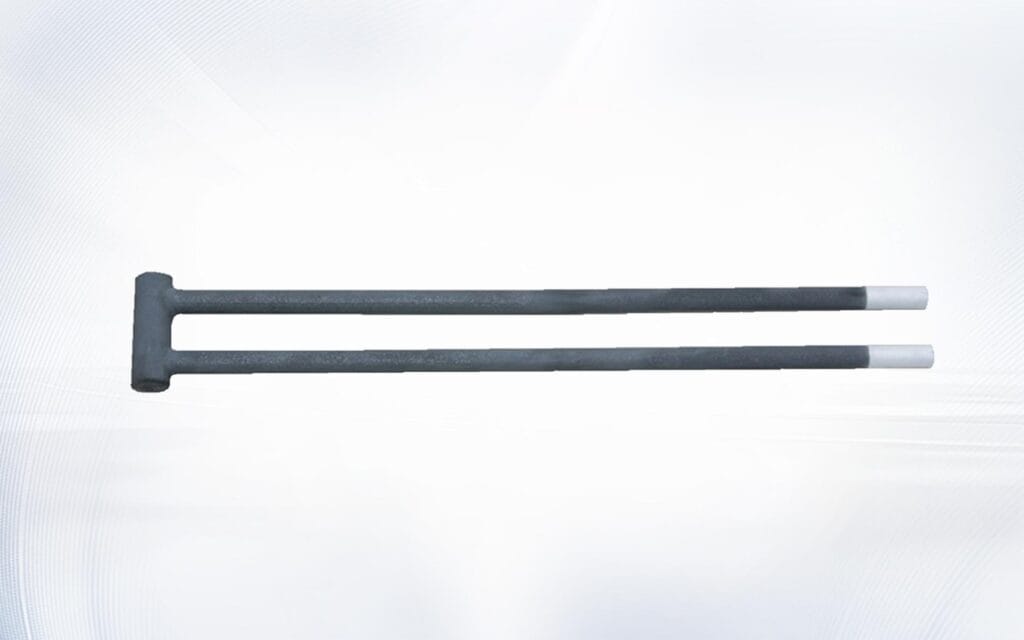
A photograph is rarely enough to select a replacement heating rod accurately. Similar-looking elements may differ in electrical resistance, active heating length, cold-end design, or installation dimensions.
Record the following information before requesting a replacement:
Element Structure
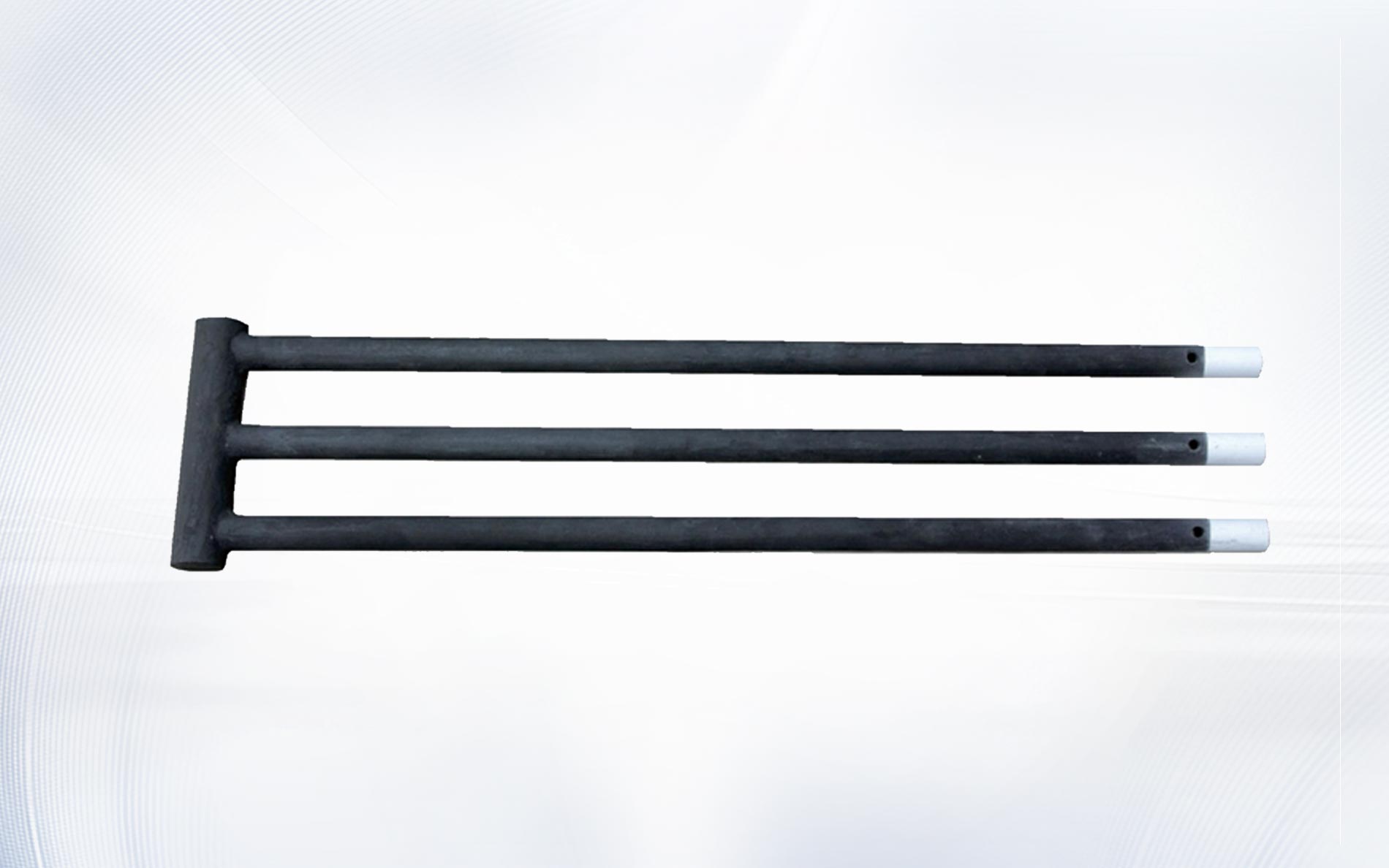
Identify whether the existing rod is straight, equal diameter, thickened-end, single-end, U-shaped, W-shaped, or another special structure.
Overall Length
Measure the complete element from end to end.
Heating-Zone Length
The active heating section must align with the furnace chamber rather than the insulation or terminal area.
Cold-End Length
Cold ends should extend through the furnace wall and provide a suitable connection area.
Diameter
For rods with different heating-section and cold-end diameters, record both values.
Resistance
Record the original specification when available and measure the current resistance under consistent conditions.
Furnace Electrical Data
Provide voltage, installed power, circuit arrangement, number of rods, and number of rods per control zone.
Operating Conditions
Include working temperature, maximum temperature, furnace atmosphere, process material, cycle frequency, and the problem that triggered replacement.
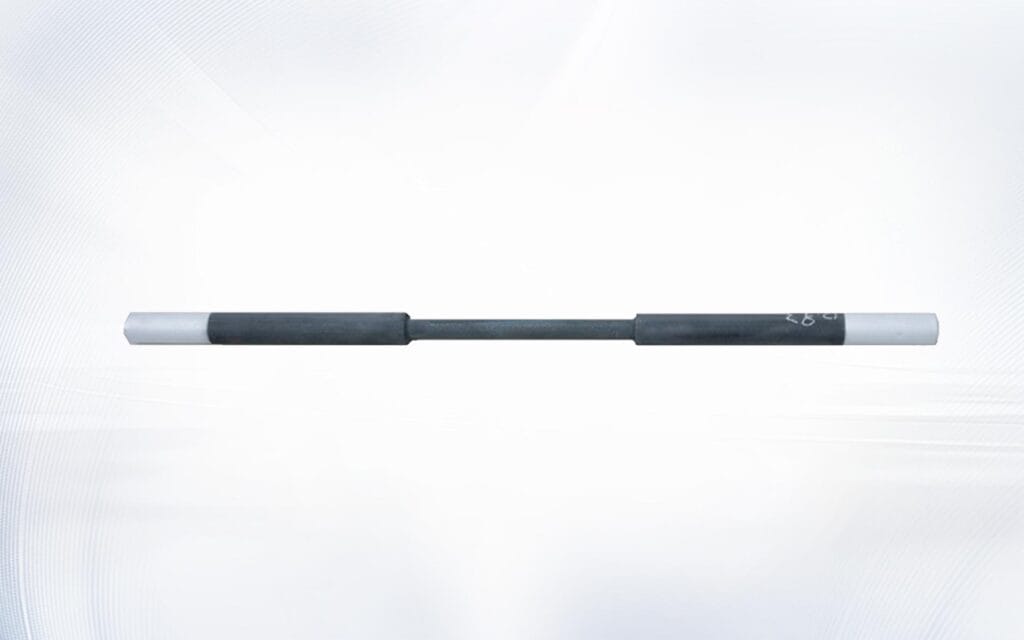
A straight thickened-end structure such as the DB Type Silicon Carbide Heating Element should only replace an existing element after these parameters have been matched.
How to Inspect the Furnace During Rod Removal
A replacement shutdown is also an opportunity to identify why the previous rod aged or failed.
After isolating the furnace power and allowing the equipment to cool according to the facility’s safety procedures, inspect the following areas.
Furnace Openings
Check the holes through which the element passes. Damaged refractory material, accumulated dust, or misalignment can apply mechanical stress to the new rod.
Insulation
Look for collapsed, cracked, or displaced insulation. Heat loss near one position may force the surrounding rods to operate harder.
Terminal Connections
Inspect conductive straps, clamps, cables, and contact surfaces for oxidation, looseness, discoloration, or deformation.
Element Supports
A rod should not be forced into place or supported in a way that restricts thermal movement.
Chamber Contamination
Remove deposits that may contact or react with the new element. Process dust and vapor can affect heating performance and element aging.
Load Clearance
Confirm that products, trays, kiln furniture, and fixtures do not sit too close to the heating section.
Industrial furnace performance depends on the entire thermal system. The U.S. Department of Energy’s discussion of industrial process heating systems similarly treats heating equipment, controls, heat transfer, operating practices, and system losses as connected factors.
Selecting the Correct Replacement Element Structure
Replacement is usually simplest when the new rod retains the existing furnace’s element structure. Changing the structure may require a review of electrical design, mounting, heat distribution, and terminal arrangement.
Straight Equal-Diameter Rods
Straight rods are common in side-wall furnace layouts. The DH Type SIC Heating Element is suited to applications requiring a straight, equal-diameter element.
Thickened-End Rods
A DB Type Silicon Carbide Heating Element uses a straight structure with a narrower heating section and thickened cold ends. The heating and terminal dimensions must match the furnace design.
High-Temperature Straight Rods
For demanding furnace conditions, the SG Type Silicon Carbide Rod offers another straight rod direction. Selection still requires confirmation of dimensions, resistance, atmosphere, and operating temperature.
Single-End Rods
Single-end elements are useful when both electrical connections must remain on one side of the furnace. The SGR Type Silicon Carbide Rod can support single-sided installation in compatible furnace structures.
Changing from a straight through-wall rod to a single-end or shaped element should not be treated as a direct substitution without engineering review.
Replacement Accessories Should Be Inspected at the Same Time
New heating rods are often installed with old accessories. This can reduce the reliability of the entire replacement.
Conductive straps and clamps experience repeated thermal cycles, oxidation, mechanical movement, and connection stress. A component that appears usable may no longer provide stable contact.
Replace or service accessories when they show:
- Heavy oxidation
- Loss of elasticity
- Surface burning
- Deformation
- Loose fit
- Cracked insulation
- Damaged contact surfaces
- Repeated terminal overheating
Qixiang’s heating rod clamps are designed to secure silicon carbide elements while accommodating the expansion and contraction that occur during high-temperature cycles.
Good electrical contact is essential. However, excessive tightening can also damage ceramic elements or restrict movement. Installation should follow the furnace design and accessory specifications.
A Practical Silicon Carbide Heating Rod Replacement Procedure
The exact procedure depends on the furnace, electrical system, and facility safety requirements. The following sequence provides a practical planning framework.
- Record the furnace condition before shutdown.
- Document heat-up time, zone temperatures, controller settings, and resistance values.
- Isolate all electrical energy sources.
- Allow the furnace and elements to cool safely.
- Label rods and wiring positions before disassembly.
- Inspect conductive straps, clamps, supports, and furnace openings.
- Remove the old rod without applying force to surrounding elements.
- Compare the new rod’s dimensions and resistance with the approved specification.
- Clean the mounting and terminal areas.
- Install the replacement without bending or mechanical stress.
- Confirm correct clearance from walls, insulation, loads, and other rods.
- Reconnect suitable accessories.
- Check circuit continuity and connection stability.
- Record the new element position and initial resistance.
- Perform a controlled restart and monitor the complete heating zone.
Only trained personnel should perform electrical isolation, resistance measurement, wiring, and furnace restart activities.
How to Restart the Furnace After Replacement
A new rod should not be considered successfully installed until the furnace has completed a controlled restart.
During initial operation, monitor:
- Current and voltage
- Heating rate
- Temperature difference between zones
- Terminal temperature
- Controller output
- Abnormal sound or movement
- Discoloration at connections
- Ability to reach the required setpoint
Avoid immediately returning to the most demanding production cycle when the process allows a controlled verification run.
After the furnace reaches stable operation, inspect the terminal area again. Thermal expansion can change connection pressure, and an initially secure connection may require verification after the first cycle.
Record the restart data so future maintenance teams have a baseline for comparison.
How to Prevent Premature Replacement
The objective of maintenance is not simply to make a heating rod last as long as possible. It is to achieve a predictable and economically practical service interval without compromising product quality or furnace availability.
Useful practices include:
- Maintain consistent product loading
- Keep sufficient clearance around heating rods
- Avoid unnecessary thermal shocks
- Inspect connections at planned intervals
- Record element resistance by position
- Keep the furnace chamber clean
- Repair damaged insulation promptly
- Investigate repeated failure at the same position
- Group replacement rods appropriately
- Store spare rods in a dry, protected area
- Handle rods as ceramic components
- Maintain drawings and replacement records
When the same furnace position repeatedly experiences early failure, do not assume every replacement rod is defective. Examine airflow, insulation, electrical connections, load location, atmosphere, and mechanical alignment around that position.
Information to Send With a Replacement Inquiry
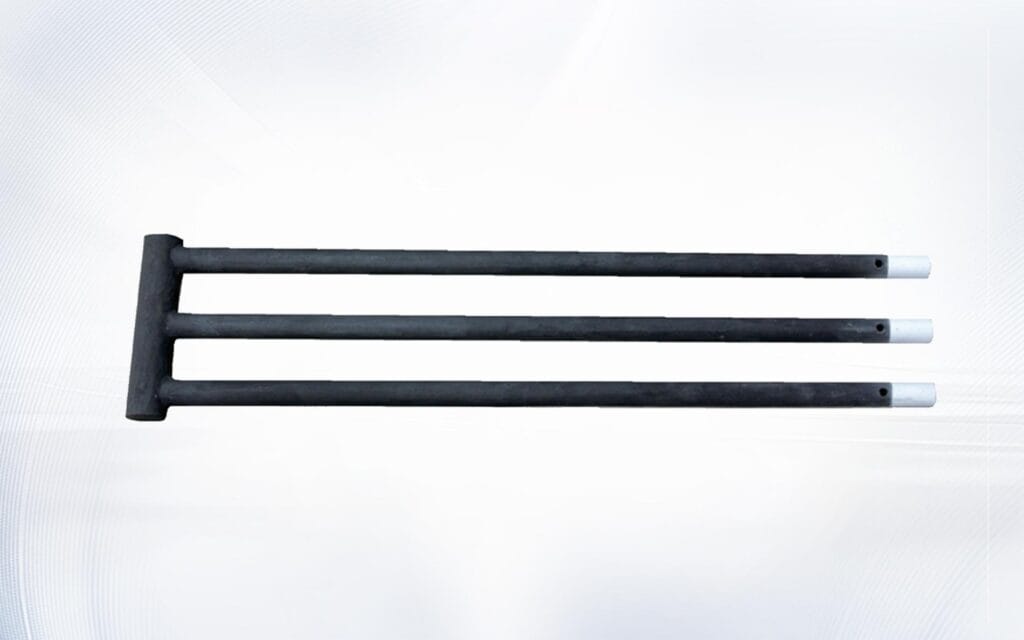
Providing complete information reduces the risk of ordering a rod that fits mechanically but does not match electrically.
Send the following details:
- Furnace type and application
- Photographs of the existing rod
- Element drawing when available
- Model or structure
- Overall length
- Heating-zone length
- Cold-end length
- Diameter
- Leg spacing for shaped rods
- Original resistance
- Current measured resistance
- Voltage and power
- Circuit arrangement
- Number of elements per zone
- Working and maximum temperatures
- Furnace atmosphere
- Failure symptoms
- Required quantity
- Accessory requirements
Available structures can be compared on Qixiang’s product center. Furnace details and replacement requirements can then be submitted through the Contact Us page.
Conclusion
Silicon carbide heating rod replacement is not merely the physical exchange of one component. It is a furnace-balancing decision involving resistance, electrical grouping, temperature distribution, connections, installation dimensions, atmosphere, and maintenance timing.
A single-rod replacement can be effective when the remaining elements are healthy and electrically compatible. When several rods have aged together or the zone already shows unstable performance, replacing the complete group may provide a more reliable result.
Before ordering, record the element dimensions, resistance, furnace electrical data, and operating conditions. During replacement, inspect terminals, accessories, insulation, openings, and load clearance. After installation, restart the furnace under controlled conditions and establish a new resistance baseline.
This system-based approach reduces repeated shutdowns, limits new-and-old rod mismatch, and helps the furnace return to stable high-temperature operation.
FAQ
Can I replace only one silicon carbide heating rod?
Yes, when the remaining rods are in good condition and their resistance values are compatible with the new element. The complete zone should be measured before making the decision.
Should all rods in one furnace zone be replaced together?
Not always. Full-zone replacement is more appropriate when several rods are heavily aged, resistance differences are substantial, or repeated failures are disrupting production.
What information is required to order a replacement rod?
Provide the rod structure, dimensions, heating-zone length, cold-end length, diameter, resistance, voltage, power, circuit arrangement, operating temperature, atmosphere, and furnace application.
Why does a new rod heat differently from the old rods?
The new rod may have a different resistance from elements that have aged during high-temperature operation. Incorrect grouping can create uneven power distribution.
Should old clamps and conductive straps be reused?
They can be reused only when their condition and contact performance remain suitable. Oxidized, loose, burned, or deformed accessories should be replaced.
How can I reduce repeated heating rod failures?
Track resistance, maintain terminal connections, prevent mechanical stress, control contamination, protect insulation, maintain consistent loading, and investigate furnace positions with repeated failures.