High-temperature furnaces don’t fail suddenly in most cases—they drift into instability. Temperature inconsistency, rising energy consumption, and uneven heating are usually early signs that something in the heating system is not working as intended.
In many industrial setups, that “something” is the heating element itself.
Among different heating technologies, SiC heater rods (silicon carbide heating elements) are still widely used because they handle extreme temperatures and long operating cycles better than many alternatives. But performance varies significantly depending on how they are selected, installed, and maintained.
This guide focuses on practical engineering decisions, not theory—based on how SiC heater rods are actually used in industrial furnaces.
Tabla de contenidos
Understanding SiC Heater Rods in Real Furnace Conditions
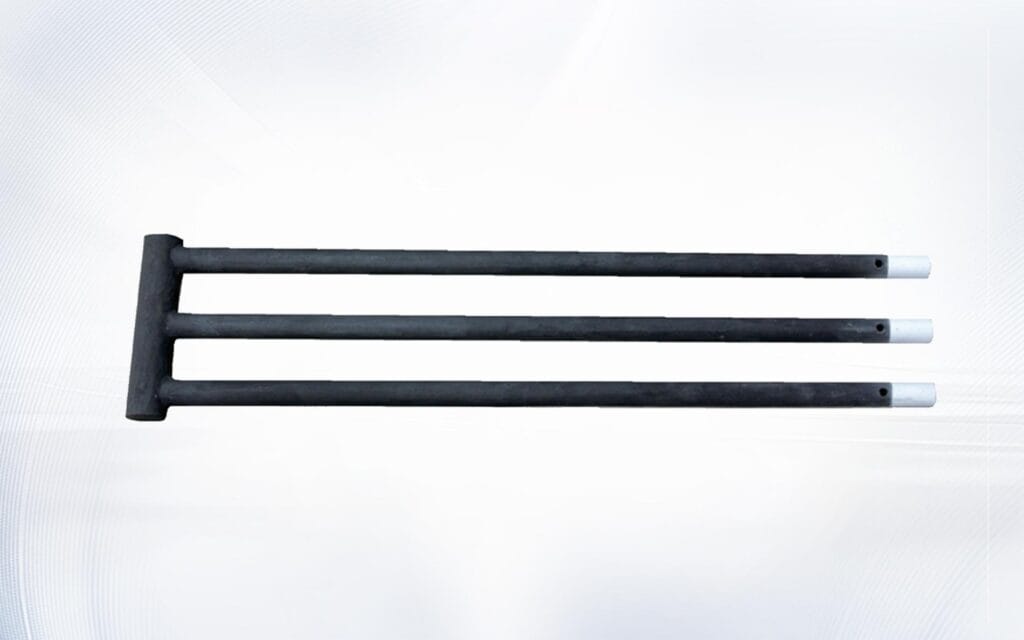
A SiC heater rod is a resistance-type heating element made from silicon carbide, designed for continuous operation in high-temperature environments.
In real applications, it behaves less like a simple “heater” and more like a radiant heat source inside the furnace chamber.
When energized:
- Electrical resistance generates heat inside the rod
- The surface emits infrared radiation
- Heat is transferred evenly across the furnace load
Unlike metal-based heating elements, SiC rods maintain structural stability at very high temperatures and are often used where metal elements would degrade too quickly.
Typical industrial usage conditions include:
- Continuous furnace operation
- Oxidizing atmosphere
- Repeated thermal cycling
- Long dwell time at high temperature
This is why SiC remains a standard choice in ceramic kilns, heat treatment furnaces, and laboratory high-temperature systems.
What Actually Defines the Performance of a SiC Heating Element
In practice, performance is not determined by a single parameter. It is a combination of electrical, thermal, and structural behavior.
Resistance behavior over time
One important characteristic often overlooked is that SiC elements do not maintain a fixed resistance. During operation, resistance gradually increases.
This directly impacts:
- Current draw
- Heating consistency
- Power balance across furnace zones
A properly designed system accounts for this change from the beginning.
Structural configuration matters more than expected
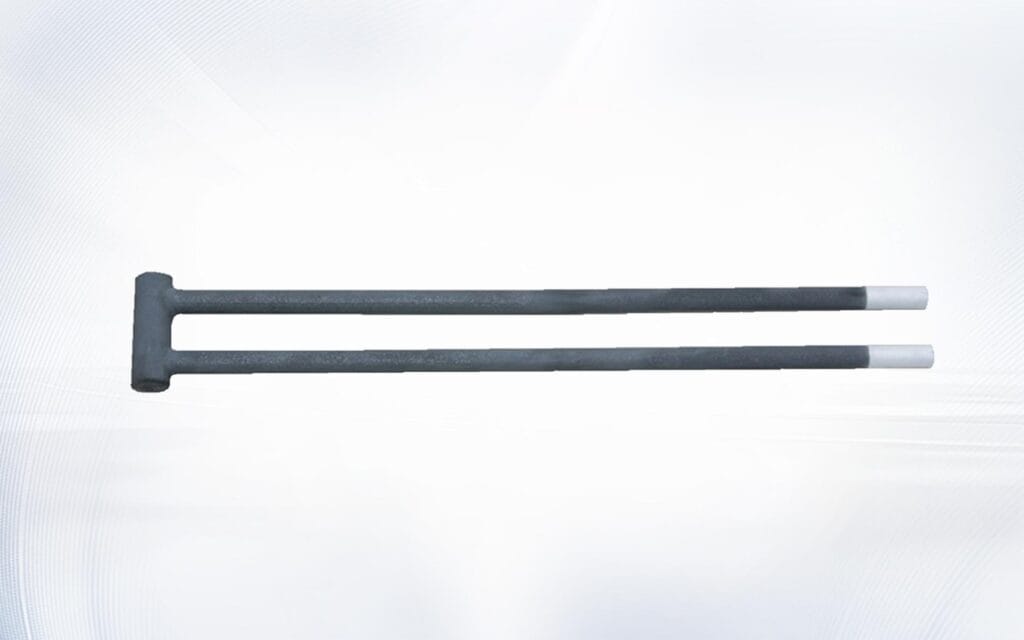
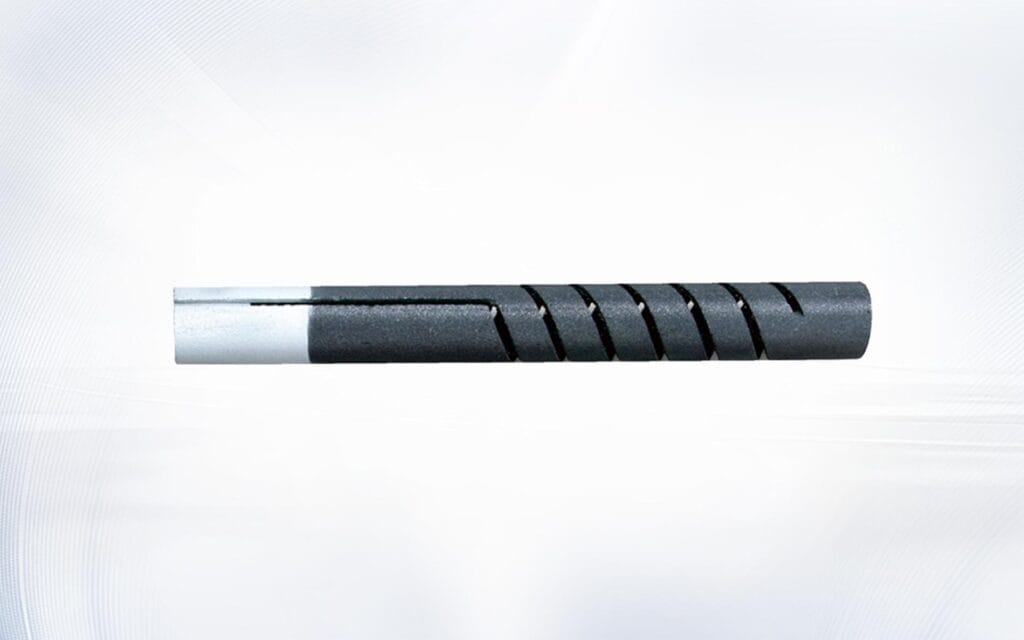
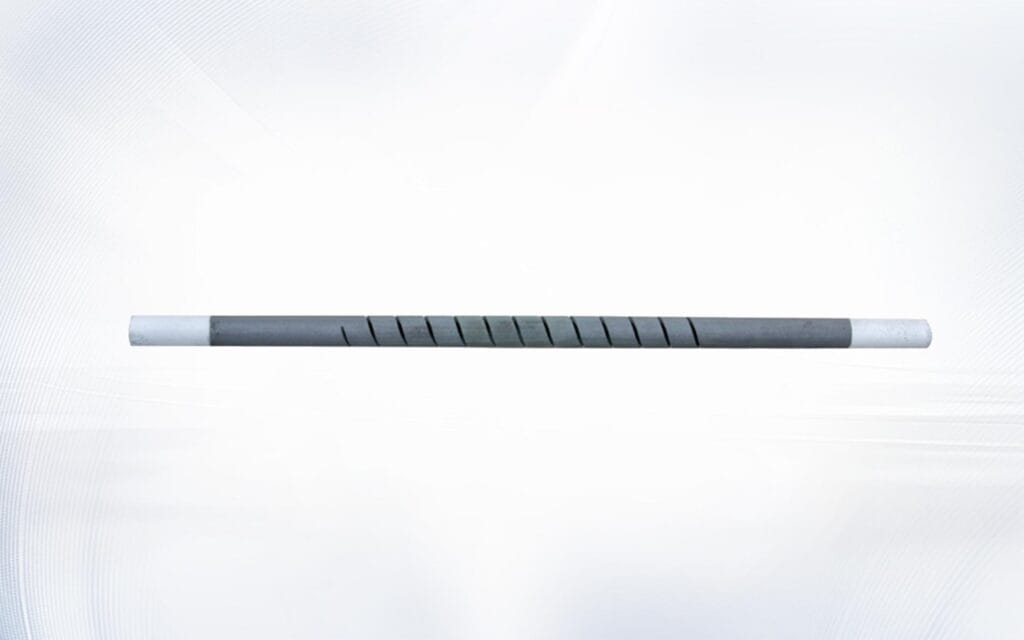
SiC heater rods are not all the same shape, and geometry directly affects performance.
Common industrial structures include:
- Straight rods for simple furnace layouts
- U-shaped configurations for compact chambers
- H-type designs for balanced heat distribution
- Custom configurations for special furnaces
Each structure influences how heat spreads inside the furnace.
Temperature capability is only part of the picture
Although SiC heating elements are often associated with very high operating temperatures, what matters more is:
- Stability under long exposure
- Resistance to thermal shock
- Oxidation behavior over time
Where SiC Heater Rods Are Actually Used
Rather than listing industries in isolation, it is more useful to understand why SiC is used in certain systems.
Ceramic production systems
In kiln environments, consistency matters more than peak temperature. SiC rods provide stable radiant heat, which helps reduce uneven firing results.
Glass and thermal processing lines
Glass processing requires uniform heating across large surfaces. SiC elements are often used in zones where temperature control is critical.
Metallurgy and heat treatment systems
In metal processing, SiC rods are preferred when continuous high-temperature cycles are required without frequent replacement downtime.
Laboratory and controlled environments
Research furnaces often rely on SiC heating elements because they provide predictable thermal behavior over long test cycles.
Selection Is Not About Size Alone
A common misunderstanding is treating SiC heater rod selection as a dimensional choice. In real engineering practice, selection is closer to system matching.
Electrical matching with furnace load
The heating element must align with:
- Furnace power capacity
- Control system output
- Phase distribution
Incorrect matching often leads to instability rather than immediate failure.
Diameter and resistance balance
- Larger diameter usually improves mechanical stability
- Resistance value determines current behavior
- Incorrect pairing can lead to uneven heating zones
Furnace geometry plays a role
Horizontal and vertical installations behave differently under thermal expansion. Mechanical stress distribution changes depending on layout.
Heating uniformity is a system outcome
Uniform temperature is not achieved by the element alone. It depends on:
- Layout spacing
- Control zoning
- Load distribution inside the chamber
SiC vs MoSi2 Heating Elements (From a Practical Perspective)
Instead of theoretical comparison, it is more useful to view this from application behavior.
SiC heating elements:
- Stable in continuous industrial cycles
- Strong performance in oxidizing environments
- Gradual resistance drift over time (expected behavior)
MoSi₂ elements:
- Better suited for higher peak temperature applications
- Different aging characteristics
- More sensitive in certain operating conditions
In real industrial systems, the choice is rarely about “which is better,” but about which behaves more predictably in your furnace process.
Failure Patterns That Are Often Misunderstood
Most SiC heater rod issues are not random failures—they are predictable system responses.
Mechanical cracking
Usually linked to:
- Improper installation pressure
- Expansion stress during heating cycles
- Rapid temperature changes
Uneven heating inside furnace
Common causes include:
- Resistance mismatch between rods
- Aging differences in element batches
- Incorrect zoning design
Gradual performance decline
This is not a defect—it is a known behavior of silicon carbide materials as they oxidize over time.
What Happens Inside Manufacturing (And Why It Matters)
Understanding manufacturing helps explain why two SiC heater rods with similar appearance can perform differently.
Material selection phase
Purity of silicon carbide directly affects:
- Electrical stability
- Thermal endurance
- Long-term consistency
Sintering process
High-temperature processing defines:
- Structural density
- Mechanical strength
- Resistance stability
Forming and shaping
Precision during forming affects:
- Electrical uniformity
- Hot zone consistency
- Installation compatibility
Testing before release
Typical checks include:
- Resistance consistency
- Structural integrity
- Thermal response stability
Small variations at this stage often become large differences in real furnace operation.
Why Direct Manufacturing Matters in Industrial Heating Systems
In industrial heating applications, SiC rods are not standalone components—they are part of a controlled thermal system.
Working directly with a manufacturer typically allows:
- More stable technical specifications
- Custom configurations based on furnace design
- Faster engineering feedback
- Better alignment between system design and element behavior
In many cases, performance issues are not caused by the element itself, but by mismatched system integration.
Operational Practices That Extend Service Life
In real industrial environments, operating method often determines lifespan more than material quality alone.
Key practices include:
- Gradual heating and cooling cycles
- Avoiding sudden load changes
- Regular electrical balance checks
- Monitoring resistance drift patterns
- Preventing mechanical stress on terminals
Stable operation is usually the result of system discipline rather than isolated component strength.
Personalizado SiC Heater Rod Solutions in Modern Furnace Design
Industrial furnaces are rarely identical. Even within the same industry, system design varies significantly.
Customization often includes:
- Structural adjustment for furnace geometry
- Resistance tuning for control systems
- Hot zone design optimization
- Mechanical adaptation for installation constraints
This is especially important in OEM furnace manufacturing, where heating systems must match different production environments.
Conclusión
SiC heater rods remain a core solution for high-temperature industrial heating systems because they combine durability, stability, and adaptability across a wide range of furnace applications.
However, real performance is not determined by the material alone. It depends on how well the heating element is:
- Matched to the furnace system
- Installed within the thermal structure
- Operated under real production conditions
- Maintained over long cycles
For industrial users, the most reliable results usually come from treating SiC heating elements not as simple consumables, but as part of a complete thermal system design.
Preguntas frecuentes
What is a SiC heater rod used for?
A SiC heater rod is mainly used in high-temperature industrial furnaces, including ceramic kilns, heat treatment systems, glass processing equipment, and laboratory furnaces where stable and continuous radiant heating is required.
How long does a SiC heating element typically last?
The service life depends on operating temperature, load conditions, and maintenance practices. In stable furnace environments with proper control, SiC heater rods can operate for long cycles before showing performance decline due to natural resistance drift.
Why do SiC heater rods increase in resistance over time?
This is a normal material behavior. During high-temperature operation, silicon carbide undergoes gradual oxidation, which changes its electrical resistance and slightly affects power output over time.
What causes SiC heater rods to break or fail?
Common causes include thermal shock from rapid heating or cooling, mechanical stress during installation, uneven load distribution, and improper furnace design or control settings.
How do I choose the right SiC heater rod for my furnace?
Selection depends on furnace temperature requirements, electrical load, resistance matching, installation structure, and heating uniformity needs. Proper system matching is more important than size alone.