Table of Contents
Selecting glass furnace heating elements is not only a matter of matching a drawing or replacing the same shape that came out of the furnace. In glass processing, small differences in heat distribution can affect melt quality, annealing stability, energy use, and element service life. Buyers usually search for glass furnace heating elements when a production line is being repaired, upgraded, or prepared for a new glass recipe. The practical question is simple: which details must be checked before ordering so the new elements fit the furnace and run reliably?
This guide focuses on the purchasing and engineering checks that help reduce avoidable failures. It is written for procurement teams, furnace maintenance engineers, kiln builders, and plant managers who need glass furnace heating elements for high-temperature equipment but do not want a generic product introduction. For product options, you can also review Qixiang Material’s silicon carbide heating elements and contact the team through the contact page when a drawing or operating condition needs confirmation.
Why selection matters in glass furnace heating
Glass furnaces and related thermal equipment often run at demanding temperatures for long periods. A heating element that looks correct may still underperform if the hot-zone length, cold-end design, terminal arrangement, or electrical resistance does not match the furnace. Poorly selected glass furnace heating elements can create local overheating, uneven chamber temperature, unstable control response, or premature breakage near the terminals.
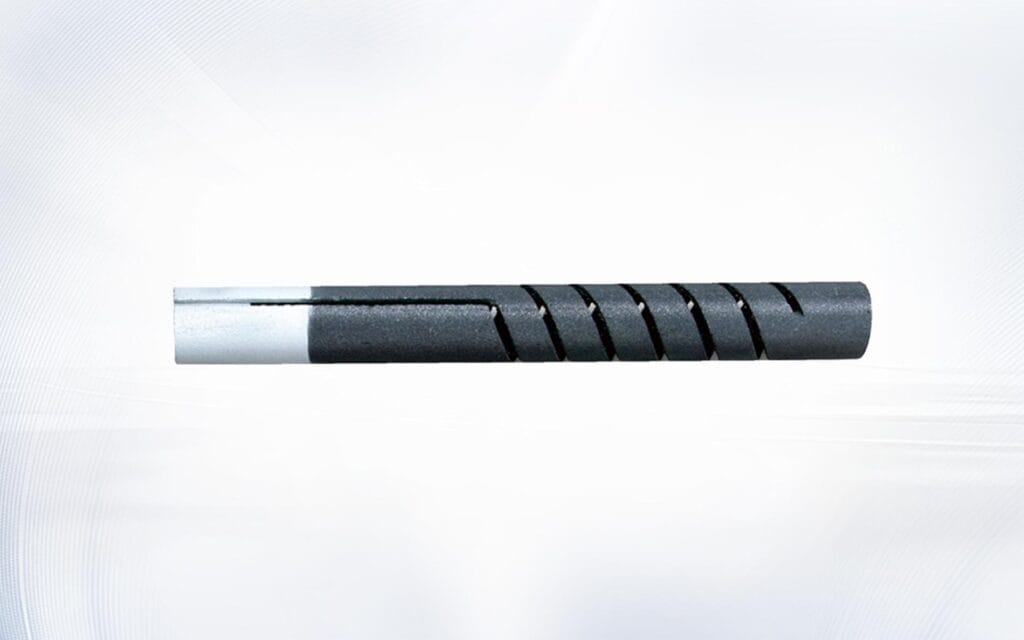
In many plants, the replacement decision is made under time pressure. That is understandable, but the safest approach is to capture the operating data before the old element is discarded. The key details include furnace temperature, atmosphere, voltage, phase arrangement, element spacing, support structure, and visible failure position. These details help determine whether a standard SG type silicon carbide rod, an SGR type, a double-spiral design, or another shape is more appropriate.
Operating conditions to confirm first
Before choosing glass furnace heating elements, confirm the real working conditions rather than relying only on nominal equipment labels. Glass production may involve continuous heating, frequent furnace cycling, or localized zones that run hotter than the controller setpoint. The operating temperature should be checked near the element zone, not only at the process chamber center. For background on temperature measurement principles, the National Institute of Standards and Technology provides useful reference material on temperature units and measurement.
Atmosphere matters as well. Silicon carbide elements form a protective surface layer during operation, and the rate of aging can change with moisture, gases, contaminants, and cycling pattern. When the furnace is used for glass melting, frit production, annealing, decorating, or laboratory glass work, the surrounding atmosphere may not be identical. General information on glass as a material is available from Wikipedia’s glass overview, but the actual purchase decision should be based on the equipment environment and element supplier review.
| Check item | Why it matters | What to record |
|---|---|---|
| Maximum zone temperature | Affects material and surface loading | Setpoint and measured peak |
| Furnace atmosphere | Influences aging and surface condition | Air, gas, vapor, or process fumes |
| Electrical supply | Controls resistance matching | Voltage, phase, transformer taps |
| Element support | Prevents bending or stress fracture | Hole size, support brick, clearances |
Choosing the right element type
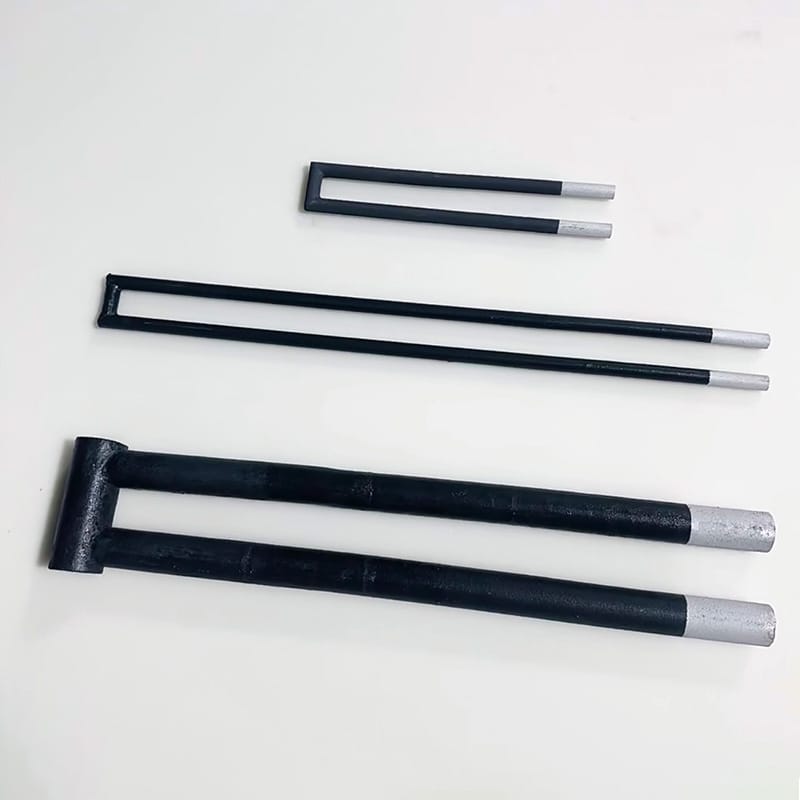
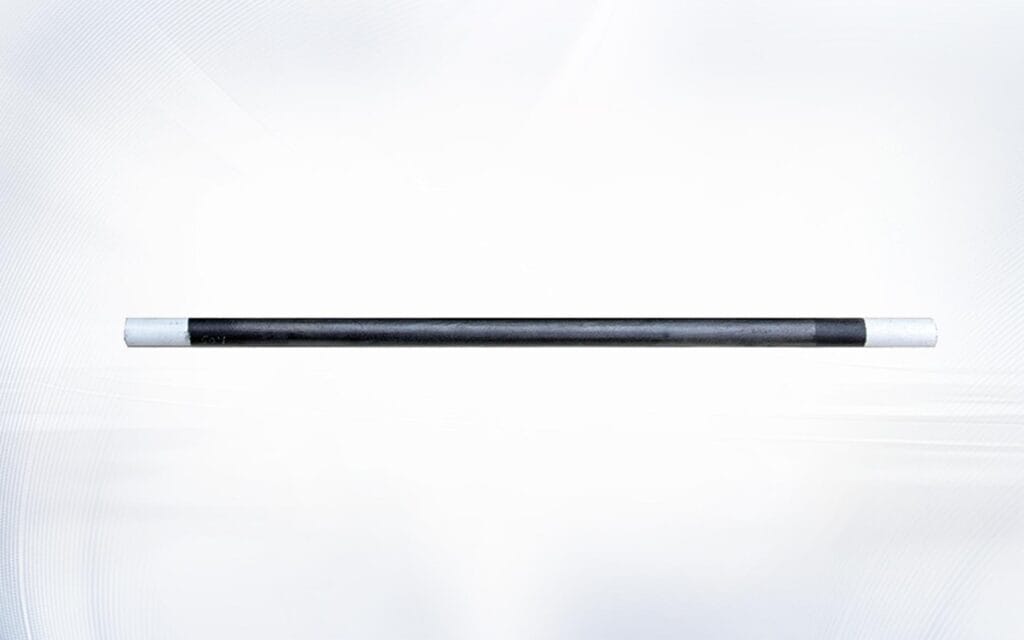
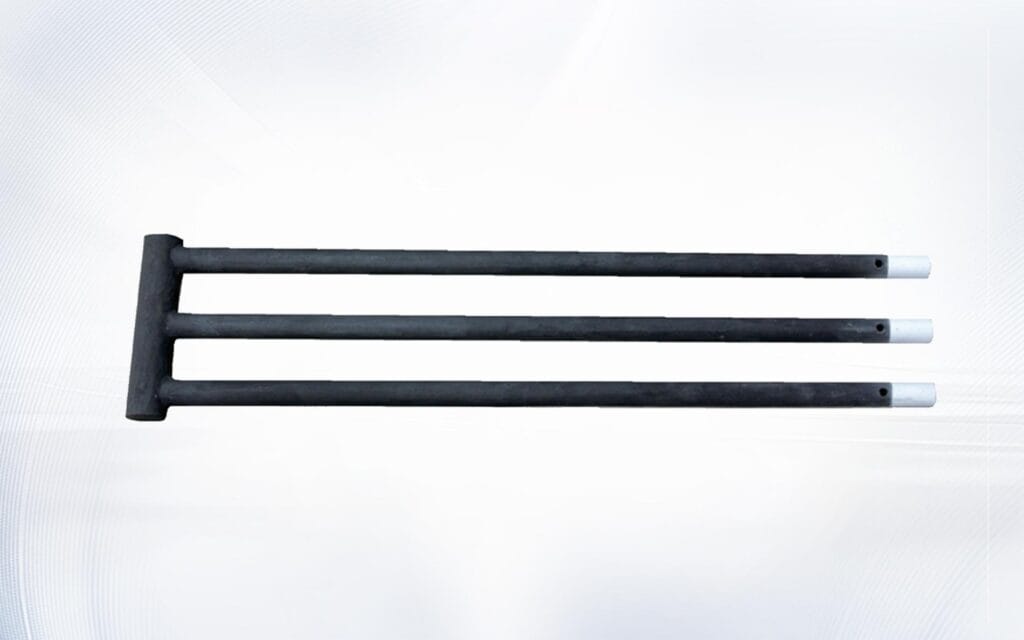
Different glass furnace heating elements solve different layout problems. Straight rods are common when the furnace wall allows horizontal or vertical installation and the terminal area can remain cooler. Dumbbell or equal-diameter designs may be useful where cold ends, hot zones, and resistance requirements need a specific balance. W-shaped or U-shaped designs can help when heat must be concentrated in a limited space or when the furnace geometry does not allow long straight rods.
Qixiang Material’s DH type SiC heating element is one option for buyers who need a defined hot zone and terminal arrangement. The right selection depends on drawing dimensions and operating conditions. When existing glass furnace heating elements have failed near the hot-cold junction, the replacement should not be ordered only by total length. Hot-zone length, cold-end diameter, terminal coating, and installation clearance all deserve attention.
Layout, wiring, and resistance balance
The layout of glass furnace heating elements should support uniform heat, easy maintenance, and stable electrical loading. If elements are installed too close to the ware, the furnace wall, or each other, heat distribution may become uneven and local temperatures may rise. If terminal connections are tight, unsupported, or exposed to excess heat, contact resistance can increase and damage the connection point. Safe electrical maintenance should follow the plant’s lockout procedure; OSHA’s control of hazardous energy guidance is a useful reference for general safety principles.
Resistance balance is especially important when multiple glass furnace heating elements operate in one zone. New elements and aged elements may not share load evenly. If a few new elements are mixed with older units, the control system may not behave as expected. Qixiang’s article on silicon carbide heating element resistance is a helpful internal reference for understanding why resistance changes over time.
When a furnace has several control zones, record the location of each element and mark the electrical group. This is useful for future troubleshooting. A simple zone map can show whether the problem is limited to one transformer, one terminal strip, one furnace wall, or one batch of glass furnace heating elements. The U.S. Department of Energy also maintains general resources on industrial process heating, which can help teams think about heat systems more broadly.
Maintenance checks before reordering
Before reordering glass furnace heating elements, inspect the failed units and nearby furnace structure. Look for white deposits, cracked support brick, loose clamps, overheated terminals, and signs of element sagging. The failure location often tells a better story than the purchase record. Breakage near the support may indicate mechanical stress. Damage at the terminal may suggest poor contact or high ambient temperature. Uneven aging across one wall may point to airflow, insulation, or control imbalance.
Maintenance teams should also check whether accessories need replacement. Old clamps, straps, ceramic holders, and terminal hardware can shorten the life of new glass furnace heating elements. If the connection area is already oxidized or distorted, installing new rods alone may not solve the issue. Qixiang Material’s heating element accessories can be reviewed alongside the main elements so the installation package is complete.
Buyer checklist
A good inquiry for glass furnace heating elements should include drawings, photos, electrical data, furnace temperature, atmosphere, and the quantity per zone. If drawings are unavailable, measure total length, hot-zone length, cold-end length, diameter, terminal diameter, and connection type. Add photos of the furnace wall and failed elements. These details help reduce back-and-forth communication and make the supplier’s recommendation more useful.
- Confirm the process: melting, annealing, decorating, lab testing, or auxiliary heating.
- Record the maximum operating temperature and normal control range.
- Measure hot zone, cold ends, diameter, terminal details, and installation spacing.
- Check whether old and new glass furnace heating elements will be mixed in one circuit.
- Review support bricks, clamps, straps, and connection hardware before startup.
- Ask for selection support if the old failure pattern is unusual or repeated.
Well-selected glass furnace heating elements give the furnace a better chance of stable heat, predictable maintenance, and longer service life. The best replacement order is not just a part number. It is a clear description of how the element will work inside the furnace. If you are planning a replacement, upgrade, or new furnace build, send the drawing and operating conditions through Qixiang Material’s contact page for review.