High-temperature furnaces are not forgiving environments. Once temperatures climb into sustained industrial ranges, most heating materials begin to show their limits—warping, oxidizing, drifting in resistance, or simply losing consistency over time. That’s usually where silicon carbide heating technology comes into the picture.
SiC heater elements are not a “new trend,” but their role has become far more important as industries push for tighter thermal control, longer production cycles, and fewer shutdowns. Instead of treating them as just another consumable part, many furnace designs now consider them a core performance component.
This article breaks down where they actually perform well, where they struggle, and why they continue to show up in so many high-temperature systems.
Table of Contents
Where SiC Heater Elements Fit in Modern Furnace Design

In most industrial furnace setups, heating elements are expected to do more than just generate heat. They indirectly influence product quality, energy stability, and even maintenance schedules.
SiC heater elements tend to appear in systems such as:
- Continuous heat treatment furnaces
- Ceramic sintering kilns
- Glass annealing and melting systems
- Laboratory and pilot-scale thermal equipment
- High-temperature processing lines in metallurgy
What makes them relevant here is not just temperature tolerance, but how consistently they behave over long operating cycles.
The Working Principle (Without Overcomplication)
At a basic level, SiC heater elements rely on electrical resistance to generate heat. Current flows through the silicon carbide body, and the material naturally resists that flow, converting electrical energy into thermal energy.
That sounds straightforward, but the important detail is how stable that resistance remains under heat.
Unlike many metallic heating elements that shift significantly as temperatures rise, SiC maintains a more predictable resistance curve once it reaches operating conditions. That stability is what furnace engineers care about more than anything else.
What Actually Makes Silicon Carbide Useful in High Heat
Instead of listing textbook material properties, it’s more useful to look at how those properties behave in real furnace environments.
Thermal stability under continuous load
In long production cycles, temperature consistency matters more than peak capability. SiC performs well in steady-state conditions where furnaces run for extended periods without interruption.
Surface oxidation behavior that is actually beneficial
Rather than degrading rapidly, SiC forms a protective layer during operation. This layer slows further deterioration and helps extend usable life in oxidizing atmospheres.
Resistance to sudden temperature shifts
Furnaces don’t always heat or cool in perfect curves. SiC handles moderate thermal fluctuations without immediate cracking or structural failure.
Mechanical integrity at elevated temperatures
Even when exposed to constant radiant heat, the structure remains stable enough to avoid deformation issues that often affect metallic alternatives.
Why They Are Still Widely Used in High-Temperature Furnaces
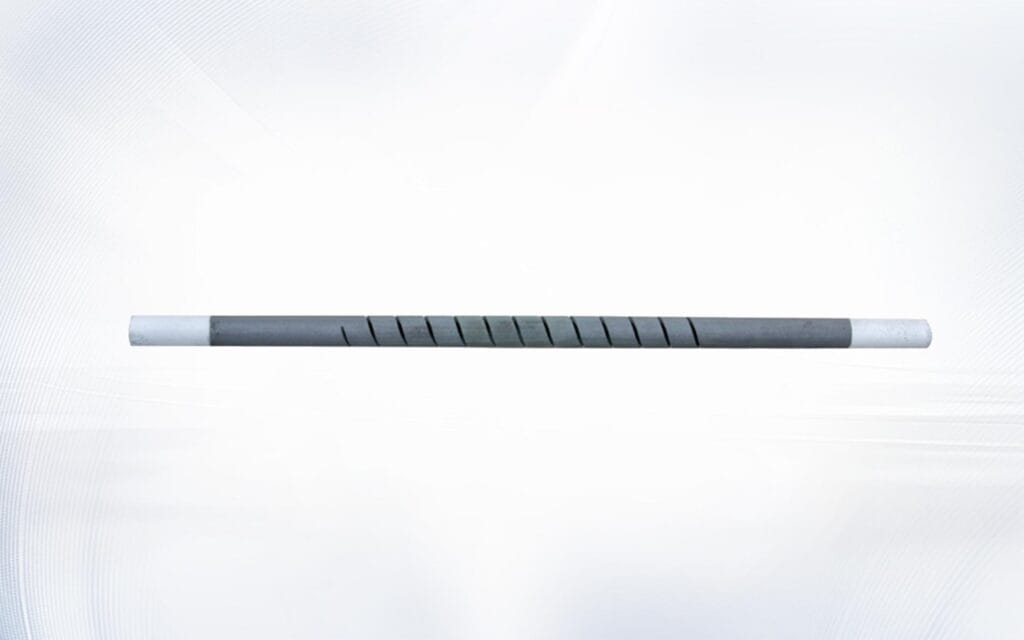
There is no single reason industries keep choosing SiC heater elements. It’s usually a combination of operational consistency and system reliability.
In practice, engineers value them because:
- They maintain heating behavior over long cycles
- They support more uniform temperature distribution inside the furnace chamber
- They reduce the frequency of unexpected downtime caused by element failure
- They perform reliably in oxidizing industrial atmospheres
- They integrate well into both older and modern furnace designs
In many cases, the decision is less about “best material on paper” and more about “what keeps the line running.”
Where They Are Most Commonly Applied
Different industries use SiC heating technology for slightly different reasons, but the underlying requirement is always high-temperature stability.
Ceramics production
Used in firing and sintering stages where temperature uniformity directly affects final product quality.
Glass processing systems
Applied in annealing and melting processes where thermal consistency prevents internal stress in finished products.
Metal heat treatment
Supports processes like annealing and tempering where controlled heating cycles are essential.
Laboratory furnaces
Used in research environments where repeatable thermal behavior is more important than raw output.
Advanced material processing
Found in systems that require stable high-temperature conditions over extended durations.
A Practical Comparison: SiC vs MoSi₂ in Real Use
Instead of treating this as a theoretical comparison, it helps to look at how they behave in operation.
SiC heater elements tend to perform better when:
- The furnace runs continuously rather than in short bursts
- Mechanical durability under repeated cycles is important
- The operating environment is oxidizing rather than vacuum-based
MoSi₂ elements are often selected when:
- Extremely high peak temperatures are required
- The application tolerates different thermal expansion behavior
- Replacement cycles are part of planned maintenance strategy
In real engineering decisions, both are valid—it depends on furnace design goals rather than a universal “better option.”
What Usually Goes Wrong in Real Operation
Most SiC heater element issues are not caused by the material itself, but by how the system is operated.
Common scenarios include:
- Rapid heating or cooling cycles that create thermal stress
- Overloading beyond intended electrical conditions
- Uneven installation leading to mechanical strain
- Furnace atmosphere variations that accelerate surface wear
- Lack of periodic inspection in long-running systems
These issues often show up gradually rather than suddenly, which is why they are sometimes overlooked until performance drops.
Extending Service Life Without Overengineering the System
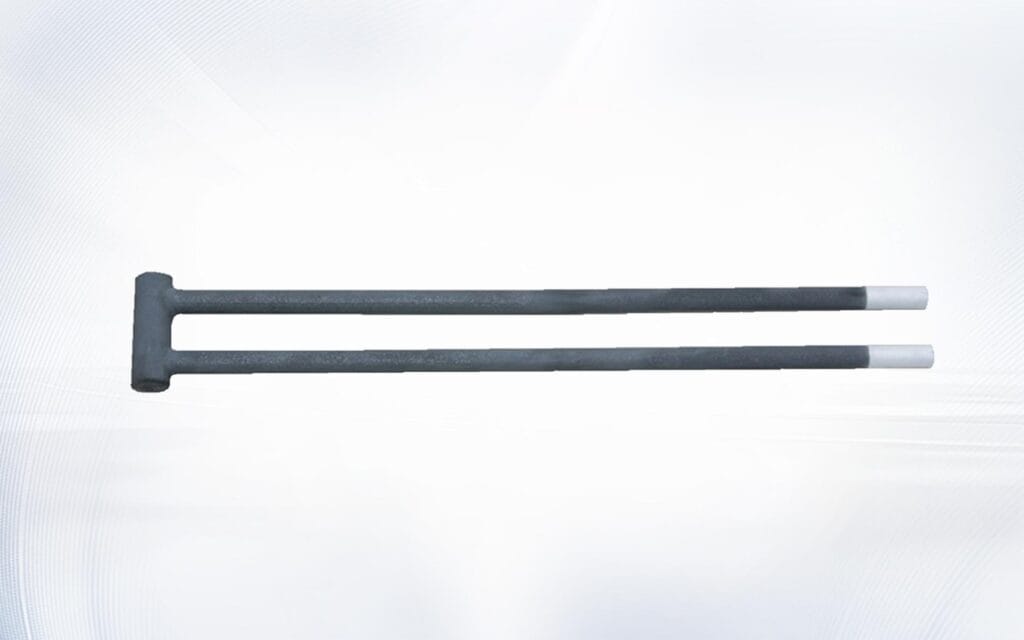
Improving lifespan is usually less about complex modifications and more about operational discipline.
In real industrial settings, the most effective practices are:
- Keeping heating ramps controlled instead of aggressive
- Avoiding unnecessary thermal cycling when the furnace is idle
- Ensuring stable electrical input conditions
- Checking connection points during scheduled maintenance windows
- Maintaining consistent furnace loading patterns where possible
These adjustments often have a bigger impact than switching to a different element type.
Selecting the Right SiC Heater Element in Practice
On paper, selection looks technical. In reality, it comes down to matching behavior with furnace conditions.
Key considerations typically include:
- Required working temperature range of the furnace
- Geometry constraints inside the heating chamber
- Electrical system compatibility
- Installation direction and support structure
- Desired heating uniformity across the load
Manufacturers usually play a more active role here than people expect, especially when furnaces are customized rather than standard.
How These Elements Are Typically Manufactured
The production process is more controlled than many assume, especially when consistency is a priority.
A simplified view of the process looks like this:
Raw silicon carbide preparation → forming into rod structure → controlled sintering → resistance calibration → thermal performance testing → final inspection
Each step influences the final stability of the heating element. Small variations in material density or resistance distribution can affect long-term behavior inside a furnace.
Why Direct Manufacturing Source Matters More Than It Seems
In industrial procurement, the difference between a manufacturer and an intermediary often shows up after installation rather than during purchase.
Working directly with a production source usually means:
- More accurate customization for furnace-specific requirements
- Better alignment between electrical design and heating performance
- More consistent batch-to-batch stability
- Faster technical feedback during integration
- Fewer misunderstandings during specification matching
For furnace systems, these details often matter more than initial selection.
Buying Perspective: What Engineers Usually Check First
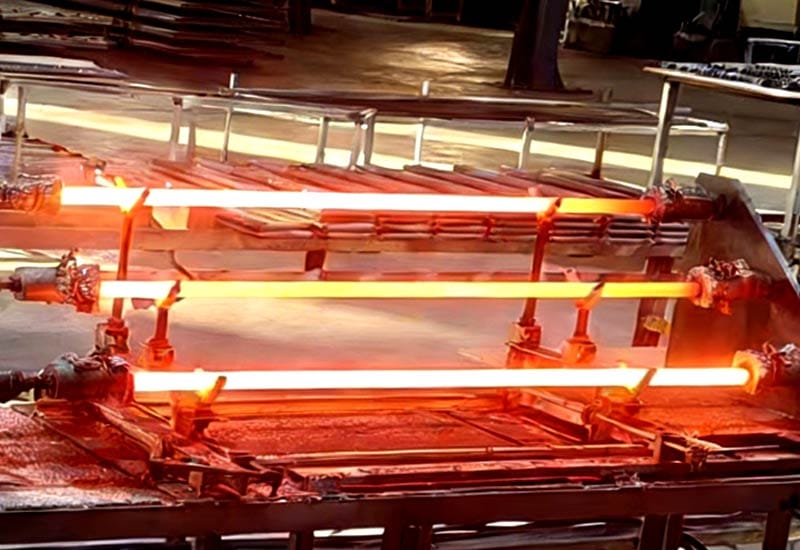
Before placing orders, technical teams usually focus on a few core questions:
- Will the element maintain stable performance under continuous operation
- Does the design match furnace geometry without forcing compromises
- Is the electrical behavior predictable across operating cycles
- Can it integrate into existing furnace systems without redesign
- Is technical support available during installation and commissioning
These points tend to matter more than marketing descriptions or general specifications.
Conclusion
SiC heater elements remain widely used in high-temperature furnace systems for a simple reason—they behave predictably under conditions where many other heating materials start to fail.
Their value is not just in maximum temperature capability, but in how they perform over time: steady heating behavior, resistance to harsh environments, and compatibility with industrial-scale production cycles.
For furnace designers and operators, the decision to use silicon carbide heating elements is usually less about innovation and more about reliability. In environments where downtime is expensive and consistency matters, that reliability becomes the real advantage.
FAQ
What are SiC heater elements used for?
SiC heater elements are mainly used in high-temperature industrial furnaces such as ceramic kilns, heat treatment systems, glass processing furnaces, and laboratory heating equipment where stable and continuous heating is required.
How do silicon carbide heating elements generate heat?
They work through electrical resistance heating. When electric current passes through the silicon carbide body, resistance converts electrical energy into heat, which is then transferred into the furnace chamber.
What is the main advantage of SiC heater elements in furnace applications?
The key advantage is stable performance under high temperatures with consistent heat distribution. They also perform well in oxidizing environments and support long operating cycles in industrial furnaces.
What causes SiC heater elements to fail during operation?
Common causes include thermal shock from rapid temperature changes, overload conditions, improper installation, and unstable furnace atmosphere. In most cases, operating conditions have a bigger impact than the material itself.
How can the service life of SiC heater elements be extended?
Service life can be improved by controlling heating and cooling rates, maintaining stable electrical input, ensuring correct installation, and performing regular inspection during furnace maintenance cycles.