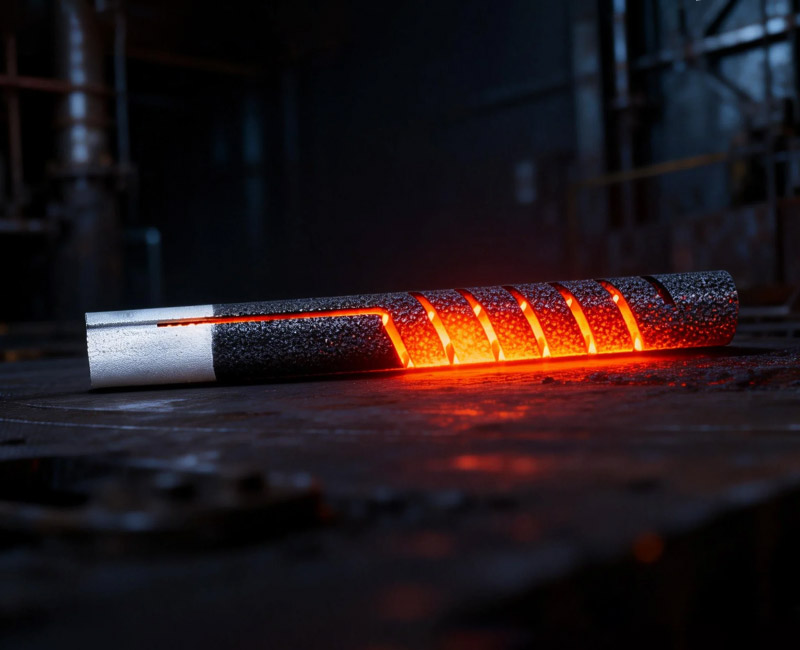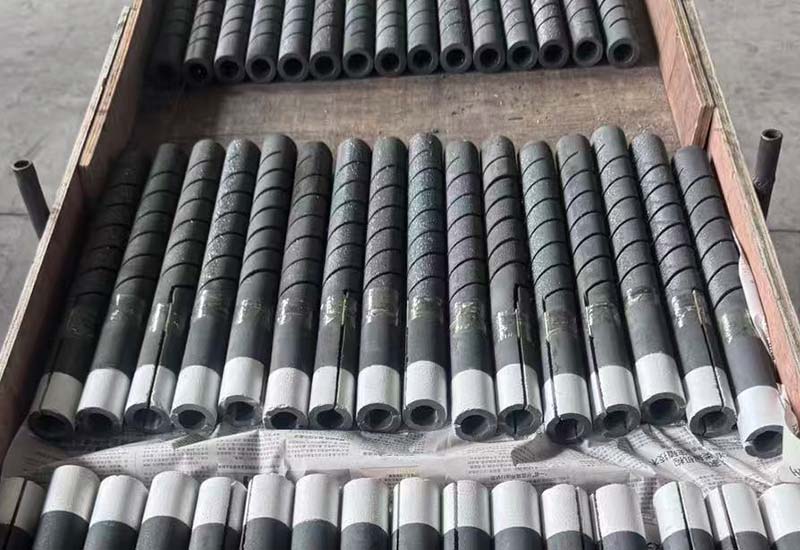
When an industrial furnace begins heating slowly, develops cold zones, or requires frequent power adjustments, the visible heating element is not always the complete problem. One of the most important diagnostic values is silicon carbide heating element resistance.
Resistance determines how electrical power is distributed through a heating element. It affects heat output, furnace balance, temperature recovery, controller performance, and the way multiple elements operate together in the same heating zone.
As silicon carbide elements operate at high temperatures, their electrical characteristics gradually change. This is a normal part of element aging. However, when resistance changes are ignored, a previously stable furnace can begin producing uneven temperatures, longer heating cycles, overheated terminals, or inconsistent processing results.
Understanding silicon carbide heating element resistance makes it easier to identify aging elements, group replacement rods correctly, maintain balanced furnace zones, and avoid replacing the wrong component.
Qixiang supplies several types of silicon carbide heating elements for industrial furnaces, ceramic kilns, laboratory furnaces, glass heating equipment, and other high-temperature applications.
Table of Contents
What Is Silicon Carbide Heating Element Resistance?
Electrical resistance describes how strongly a component opposes the flow of electric current. In a silicon carbide heating element, this resistance converts electrical energy into heat.
The basic relationship between voltage, current, and resistance is described by Ohm’s law. Although furnace heating systems are more complex than a simple circuit, the principle remains useful: changes in element resistance affect current flow and heating power.
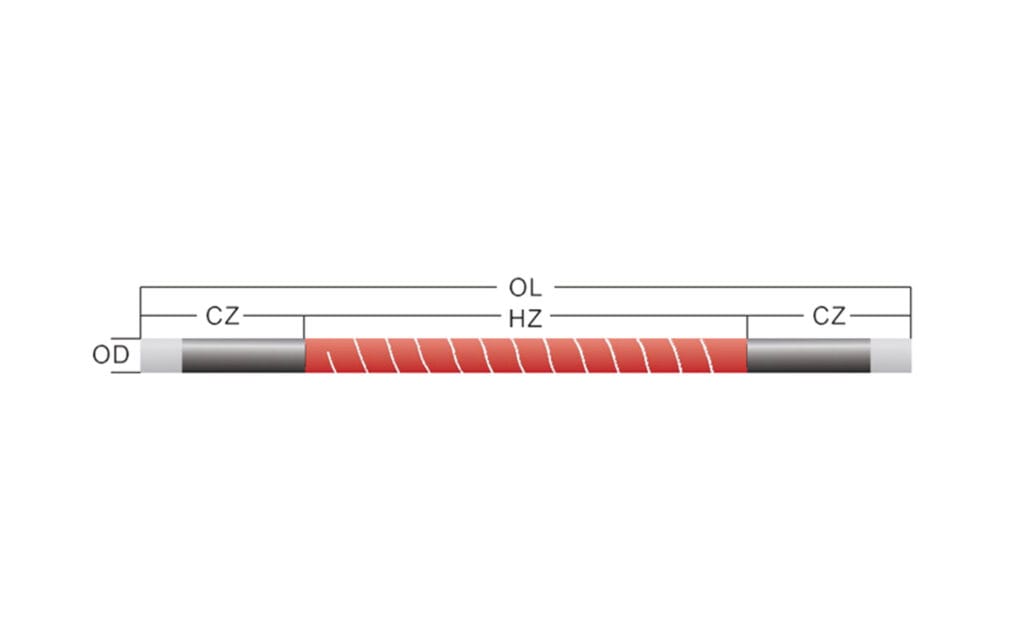
A silicon carbide heating element normally consists of:
- An active heating zone
- One or more lower-temperature cold ends
- Electrical connection areas
- Conductive straps or terminal accessories
- Furnace supports or mounting holes
The active section is designed to generate most of the heat. The cold ends allow electrical connection while limiting unnecessary heating near the furnace wall and terminal area.
If element resistance does not match the furnace electrical design, the element may produce too little heat, draw unsuitable current, or create imbalance when connected with other elements.
Why Resistance Changes During Furnace Operation
Silicon carbide is a high-temperature semiconductor material. Its electrical behavior is influenced by material composition, microstructure, additives, porosity, temperature, and manufacturing conditions.
Research into the electrical resistivity of silicon carbide ceramics shows that SiC resistivity can be affected by factors such as porosity, crystal structure, additives, and processing conditions.
In a furnace heating element, long-term operation also changes the element surface and internal structure. Common influences include:
- High-temperature oxidation
- Repeated heating and cooling
- Furnace atmosphere
- Process vapor and contamination
- Electrical loading
- Local overheating
- Mechanical stress
- Surface aging
As these changes accumulate, the operating resistance of the element generally increases. The furnace controller may compensate by supplying more voltage or adjusting power output, but the available compensation range is not unlimited.
Eventually, the furnace may struggle to reach its target temperature even though the heating element is still physically intact.
Resistance Aging Is Not the Same as Element Failure
A silicon carbide heating element does not need to be completely broken before it affects furnace performance.
An element may appear normal during visual inspection while its resistance has already changed significantly. This can result in:
- Slower furnace heat-up
- Reduced heat output in one zone
- Increased power demand
- Uneven temperature recovery
- Different heating rates between elements
- More frequent controller adjustment
- Poor process repeatability
This is why resistance measurement is more useful than visual inspection alone.
A cracked or broken element is easy to identify. An electrically aged element may continue operating while gradually reducing production stability.
Qixiang’s guide to silicon carbide rods for kilns explains how element layout, furnace loading, resistance grouping, and maintenance practices work together to influence kiln performance.
Why Resistance Matching Matters in Multi-Element Furnaces
Industrial furnaces commonly use several silicon carbide heating elements in one electrical zone. These elements must operate together as a balanced group.
If the resistance values are similar, electrical power can be distributed more evenly. If one element has a much higher or lower resistance than the others, heating performance may become unstable.
Possible results include:
- One element heating more strongly than another
- Uneven furnace wall temperatures
- Increased stress on certain elements
- Different aging rates within the same zone
- Controller difficulty maintaining uniform temperature
- Local hot spots or cold areas
- Premature failure of newly installed elements
This problem often appears when a single failed element is replaced with a new one while the remaining elements have already operated for a long time.
The new element and the aged elements may have significantly different resistance values. Even though the replacement element is the correct size and shape, the zone may no longer operate evenly.
Should One Element or the Whole Zone Be Replaced?
There is no universal rule that every element in a furnace must always be replaced together. The correct decision depends on resistance measurements, element age, furnace design, and production requirements.
Replacing one element may be reasonable when:
- The remaining elements have similar resistance values
- The other elements are still relatively new
- The failed element was damaged mechanically
- Resistance variation remains within the acceptable grouping range
- The furnace zone can be balanced after replacement
Replacing several elements or an entire zone may be more suitable when:
- Existing elements have operated for a long time
- Resistance values differ significantly
- Several elements show signs of aging
- Temperature uniformity has already deteriorated
- The controller is near its maximum compensation range
- Production consistency is critical
The goal is not simply to replace the broken element. The goal is to restore balanced furnace heating.
How to Measure Silicon Carbide Heating Element Resistance
Resistance measurements should be performed using suitable electrical measuring equipment and established plant safety procedures.
The furnace must be isolated from electrical power before inspection. Measurements should only be taken by trained personnel who understand the furnace circuit and electrical hazards.
A practical measurement process includes the following steps.
Isolate the Furnace
Turn off and isolate the furnace power supply. Confirm that the electrical circuit cannot be energized accidentally during inspection.
Allow the Furnace to Cool
Resistance readings can be influenced by temperature. Measurements used for comparison should be taken under consistent conditions.
Do not compare one element measured while warm with another element measured at room temperature.
Disconnect the Element When Required
Depending on the furnace circuit, measuring an element while it remains connected may include resistance from other elements or electrical components.
Disconnecting the element from the circuit can provide a more reliable individual reading.
Inspect the Connections
Before measuring, check whether conductive straps, terminals, clamps, or contact surfaces are loose, oxidized, or contaminated.
Poor electrical contact can create misleading readings and local overheating.
Measure Each Element
Record the resistance value of every element in the heating zone. Do not only measure the element that appears damaged.
Compare the Results
Compare elements within the same zone and review previous maintenance records when available.
A single resistance reading has limited meaning without a reference point. The most useful comparisons are:
- Current value versus original value
- Current value versus previous maintenance value
- One element versus other elements in the same zone
- One furnace zone versus another similar zone
Resistance Measurement Table
| Measurement Result | Possible Meaning | Recommended Check |
|---|---|---|
| Similar resistance across one zone | Elements are electrically balanced | Continue routine monitoring |
| One element has much higher resistance | Advanced aging or poor connection | Inspect element and terminals |
| One element has unusually low resistance | Incorrect element, measurement issue, or material variation | Recheck measurement and specifications |
| Resistance changes rapidly between inspections | Accelerated aging or abnormal furnace conditions | Check atmosphere, load, and electrical settings |
| All elements show gradually higher resistance | Normal zone aging may be progressing | Review controller compensation range |
| Resistance appears unstable | Loose connection or poor meter contact | Inspect straps, clamps, and terminals |
| New and old elements differ significantly | Replacement mismatch | Regroup or replace elements by zone |
| Resistance is acceptable but heating remains uneven | Problem may be loading, insulation, sensor position, or controls | Inspect the entire furnace system |
Cold Resistance and Operating Resistance Are Different
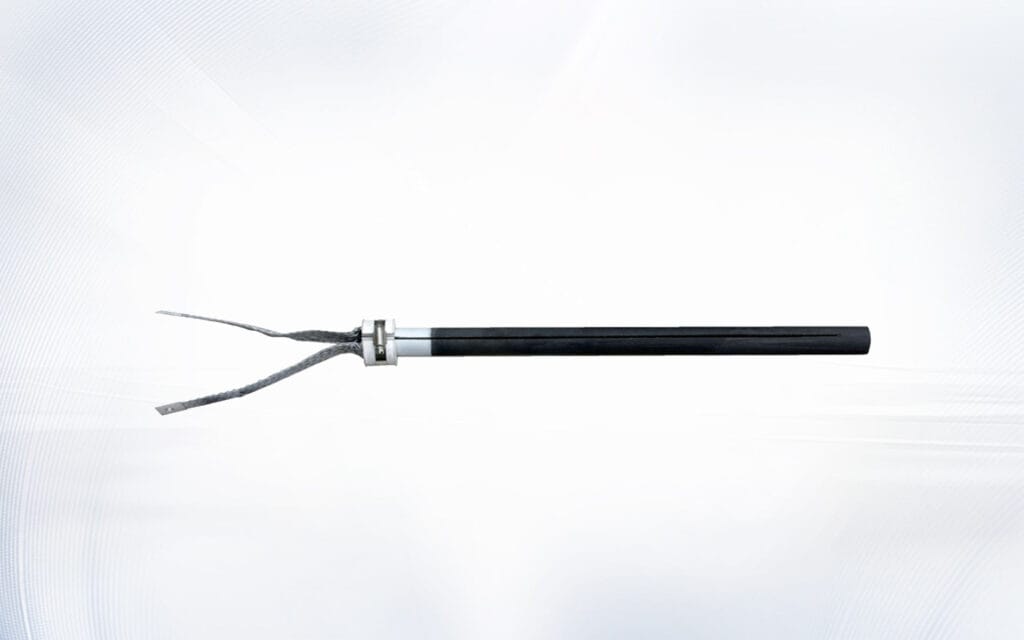
A resistance reading taken when the element is cold should not be treated as identical to resistance during high-temperature operation.
Silicon carbide has temperature-dependent electrical behavior. The actual relationship depends on element composition, structure, operating temperature, and manufacturing process.
For maintenance purposes, consistency is essential. Resistance readings should be:
- Taken at similar temperatures
- Measured using the same method
- Recorded with the same instrument type
- Compared with the supplier’s specifications
- Evaluated within the same furnace zone
This makes trend analysis much more reliable.
The purpose of routine measurement is not only to obtain an exact number. It is to observe how the element changes over time.
How Resistance Affects Furnace Power
Resistance, voltage, current, and power are interconnected. A change in one value affects the others.
In a furnace system with a fixed electrical configuration, increasing element resistance may reduce current and alter heat output. The controller or transformer may need to compensate by adjusting the available voltage.
If resistance continues increasing, the furnace may eventually reach a point where the power system cannot provide sufficient compensation.
Typical warning signs include:
- Longer heating cycles
- Slower recovery after the furnace door opens
- Difficulty reaching maximum temperature
- Greater temperature difference between zones
- Power controls operating near their limit
- Increased energy use per production cycle
- Frequent transformer tap adjustment
Industrial process heating performance depends on the complete system, including the heating elements, controls, insulation, load, and operating practices. The U.S. Department of Energy’s guidance on industrial process heating systems also emphasizes the value of evaluating heating equipment as an integrated system.
Resistance Problems Caused by Terminal Connections
Not every abnormal resistance reading means the silicon carbide element itself is damaged.
Connection problems can increase contact resistance at the terminal area. This contact resistance generates heat where heat is not wanted.
Common connection problems include:
- Loose conductive straps
- Oxidized terminal surfaces
- Incorrect clamp pressure
- Damaged braided connectors
- Contaminated cold ends
- Misaligned accessories
- Worn terminal hardware
Signs of connection-related resistance include:
- Discoloration near the terminals
- Localized overheating outside the furnace chamber
- Melted or damaged conductive straps
- Unstable meter readings
- Different temperatures at similar connections
- Frequent loosening after thermal cycles
When replacing elements, inspect the accessories at the same time. Qixiang supplies heating element accessories for electrical connection and mechanical installation.
A properly selected heating rod clamp can help maintain stable support while allowing the system to accommodate heating and cooling cycles.
How Furnace Atmosphere Influences Resistance Aging
The atmosphere inside the furnace can strongly influence heating element condition.
Silicon carbide elements are commonly used in high-temperature air atmospheres, but actual industrial furnaces may contain much more than clean air.
Potential influences include:
- Water vapor
- Reducing gases
- Alkali vapor
- Metal vapor
- Ceramic glaze compounds
- Glass processing emissions
- Carbon deposits
- Dust and powder
- Protective gases
- Process chemicals
These substances may react with or deposit on the element surface. Surface contamination can produce uneven heating, local deterioration, or accelerated resistance change.
When resistance increases more quickly than expected, consider whether the production process has changed.
Questions to investigate include:
- Has a new raw material been introduced?
- Has the firing atmosphere changed?
- Is more moisture entering the furnace?
- Has the ventilation system changed?
- Are products positioned closer to the elements?
- Is process dust accumulating on the rods?
- Has the operating temperature increased?
- Are heating cycles becoming more frequent?
Element life should always be evaluated together with the furnace environment.
How Element Shape Influences Resistance Selection
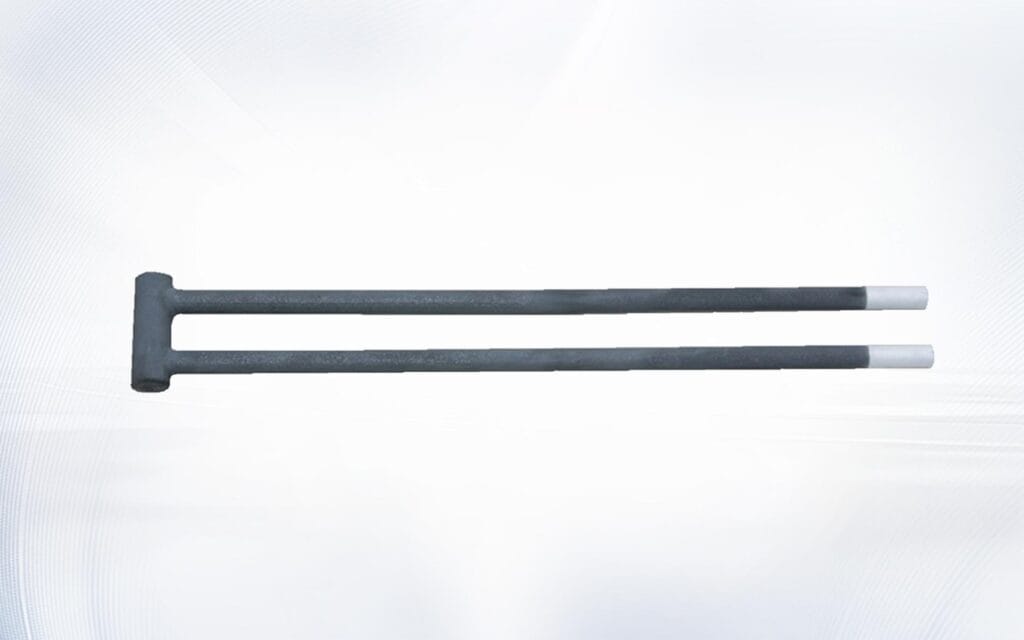
Silicon carbide heating elements are available in different structures. Element shape affects heating length, cold-end design, electrical connection, installation method, and total resistance.
Straight Elements
Straight elements are frequently used in furnaces with side-wall installation. The DH Type SIC Heating Element provides a straight equal-diameter structure for suitable furnace layouts.
DB-Type Elements
The DB Type Silicon Carbide Heating Element is another straight element structure used for demanding furnace environments. Its dimensions and resistance must match the furnace electrical system.
Single-End Elements
Single-end designs allow both electrical connections to remain on one side of the furnace. The SGR Type Silicon Carbide Rod is intended for applications where single-sided installation is required.
U-Shaped and W-Shaped Elements
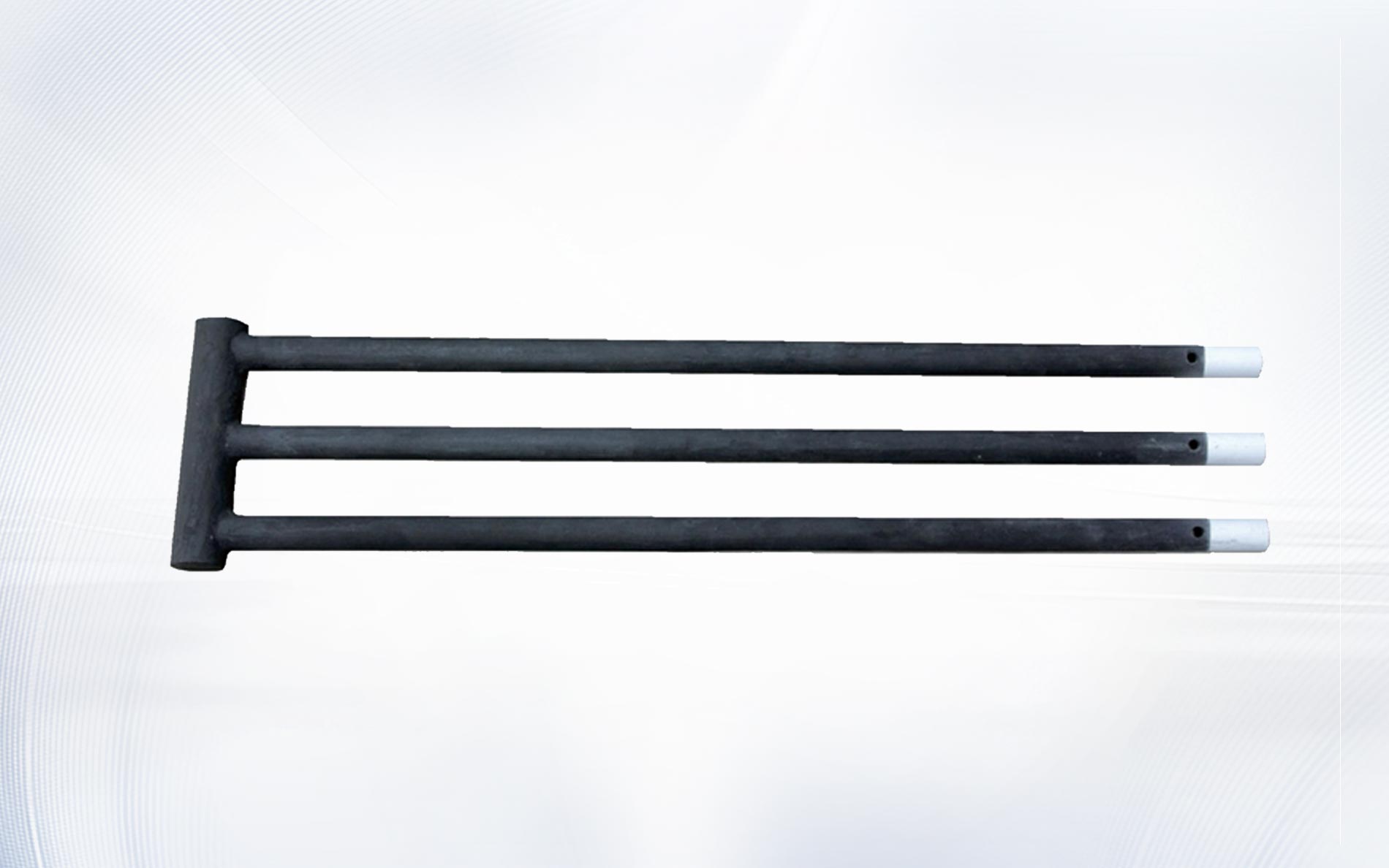
U-shaped and W-shaped elements use multiple heating legs. Their resistance selection must account for element geometry, leg spacing, heating-zone length, and circuit design.
Element types should never be exchanged solely because they fit through the same furnace opening. The electrical and thermal specifications must also match.
How to Record Resistance for Preventive Maintenance
A resistance monitoring program does not need to be complicated.
A useful furnace maintenance record can include:
| Record Item | Information to Store |
| Furnace identification | Furnace number, line, or location |
| Heating zone | Left, right, top, bottom, or numbered zone |
| Element position | Exact position within the furnace |
| Element model | DB, DH, SG, SGR, U-shaped, W-shaped, or other type |
| Installation date | Date the element entered service |
| Original resistance | Supplier or initial measured value |
| Current resistance | Value from each inspection |
| Operating temperature | Normal furnace working temperature |
| Atmosphere | Air, protective gas, reducing condition, or process vapor |
| Connection condition | Normal, loose, oxidized, or replaced |
| Corrective action | Adjustment, regrouping, or replacement |
Recording these details allows maintenance teams to identify trends instead of reacting only after failure.
For example, if one position repeatedly shows faster resistance growth, the cause may be related to load placement, airflow, insulation, or terminal cooling rather than the element itself.
Common Mistakes When Evaluating Resistance
Several mistakes can make resistance data unreliable.
Measuring at Different Temperatures
Resistance values taken under different temperature conditions should not be directly compared.
Measuring Through the Complete Circuit
The reading may include other elements or electrical components if the element remains connected.
Ignoring Meter Lead Resistance
For relatively low resistance measurements, test leads and contact quality may influence the result.
Measuring Through Oxidized Connections
Oxidized terminals can increase the measured value and hide the true element resistance.
Comparing Different Element Models
Different shapes, diameters, and heating lengths naturally have different resistance specifications.
Replacing by Appearance Alone
An element that looks damaged may not be the only electrically aged element in the zone.
Keeping No Historical Records
Without previous measurements, it is difficult to determine whether resistance is stable or increasing rapidly.
Troubleshooting Uneven Furnace Heating
When a furnace develops temperature variation, resistance should be checked as part of a wider diagnostic process.
Start with the following sequence:
- Review the temperature pattern inside the furnace.
- Measure element resistance by zone.
- Inspect conductive straps and terminals.
- Check whether old and new elements are mixed.
- Review product loading and shelf arrangement.
- Inspect insulation and furnace wall openings.
- Confirm temperature sensor position.
- Review controller and transformer settings.
- Check whether the process atmosphere has changed.
- Compare current performance with earlier maintenance records.
If resistance values are balanced but temperature remains uneven, the problem may be caused by blocked heat radiation, damaged insulation, sensor placement, or furnace loading.
Resistance is a critical diagnostic value, but it is one part of the complete heating system.
When Silicon Carbide Heating Elements Should Be Replaced
Replacement should be considered when resistance change begins affecting furnace operation.
Common replacement indicators include:
- The furnace cannot reach target temperature
- Controller compensation is near its limit
- Resistance differs significantly within one zone
- Heat-up time continues increasing
- Elements show cracks or severe surface damage
- Terminal overheating returns after connection repair
- Product quality is affected by temperature variation
- Several elements in the same zone are heavily aged
- Maintenance interruptions are becoming more frequent
Planned replacement is usually more effective than waiting for complete element failure.
A scheduled replacement allows the maintenance team to:
- Group elements by compatible resistance
- Inspect furnace holes and insulation
- Replace worn accessories
- Clean terminal areas
- Record initial resistance values
- Check zone balance before production resumes
What Information Is Needed for Replacement Selection?
Accurate replacement requires more than an element photograph.
Prepare the following information before requesting a recommendation:
- Furnace application
- Working temperature
- Maximum temperature
- Furnace atmosphere
- Element structure
- Overall length
- Heating-zone length
- Cold-end length
- Element diameter
- Leg spacing for shaped elements
- Original resistance
- Current resistance
- Furnace voltage
- Furnace power
- Circuit connection method
- Number of elements per zone
- Current operating problem
Qixiang’s complete product range includes straight, shaped, and single-end silicon carbide heating elements for different furnace structures.
Technical parameters and furnace operating details can be submitted through the Contact Us page for element selection and replacement support.
Creating a Better Resistance Matching Strategy
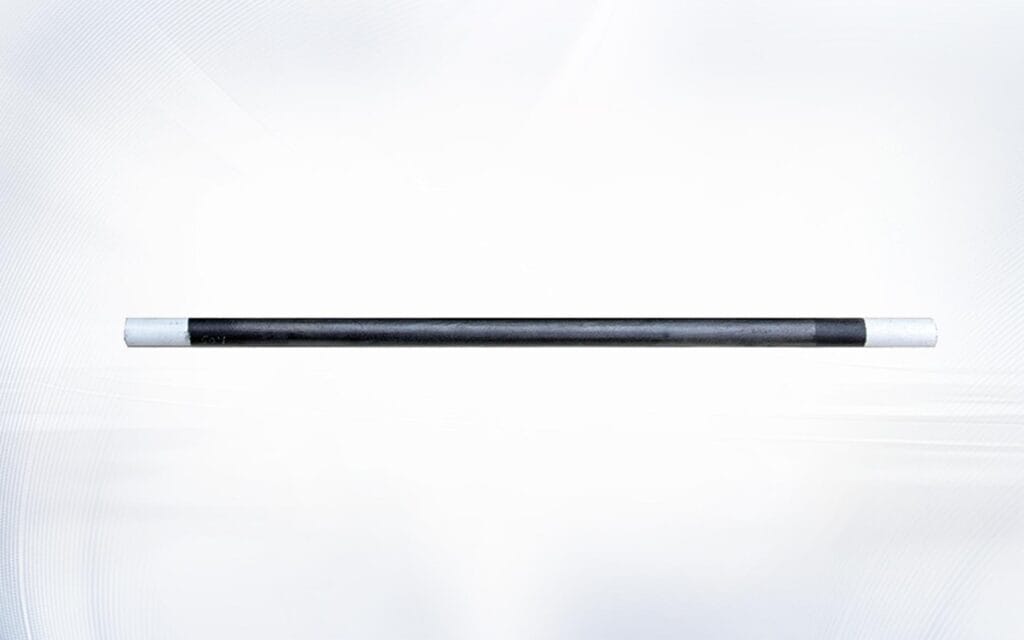
A practical resistance matching strategy should begin before the elements are installed.
First, label each element and record its supplied resistance value.
Second, divide the elements into groups with similar values according to the furnace circuit and supplier recommendations.
Third, install matched groups within the same control zone.
Fourth, record the exact position of every element.
Fifth, measure and document resistance during planned maintenance.
Sixth, review resistance differences before replacing only one element.
This process reduces uncertainty and makes future troubleshooting much faster.
It also helps identify whether a furnace problem follows a specific element, a particular installation position, or an entire electrical zone.
Conclusion
Silicon carbide heating element resistance is one of the most useful indicators of furnace condition. It influences electrical load, heat output, temperature uniformity, controller compensation, and replacement planning.
Resistance normally changes as silicon carbide elements age. The problem begins when these changes are not measured, recorded, or compared across the furnace zone.
Reliable furnace maintenance should include consistent resistance measurement, terminal inspection, element grouping, atmosphere evaluation, and historical recordkeeping.
When resistance values are properly managed, operators can identify aging earlier, avoid mismatched replacements, reduce uneven heating, and plan maintenance before production is interrupted.
The best replacement decision is not based only on whether an element is visibly broken. It is based on how the complete heating zone is performing electrically and thermally.
FAQ
What causes silicon carbide heating element resistance to increase?
Resistance generally increases because of long-term high-temperature operation, oxidation, material aging, furnace atmosphere, contamination, thermal cycling, and local overheating.
Should silicon carbide heating elements have identical resistance?
Elements in the same furnace zone should have suitably matched resistance values. Exact matching requirements depend on the furnace circuit, element type, and supplier specifications.
Can resistance be measured while the element is still installed?
It may be possible, but the furnace must be electrically isolated. The circuit configuration should be reviewed because connected components may affect the reading.
Can a new element be installed with older elements?
It may be possible when resistance values remain compatible. Large differences between new and aged elements can cause uneven power distribution.
Why does the furnace heat slowly even though no element is broken?
The elements may have aged electrically and developed higher resistance. Other possible causes include poor terminal contact, damaged insulation, controller limits, or blocked heat radiation.
How often should resistance be measured?
The interval depends on furnace temperature, production schedule, atmosphere, and process importance. Measurements should be included in regular preventive maintenance and recorded consistently.
Does furnace atmosphere affect element resistance?
Yes. Vapor, gases, dust, moisture, and process contamination can influence element surface condition and aging rate.
Where can I get help matching replacement resistance?
Review Qixiang’s silicon carbide heating elements or submit furnace dimensions, resistance values, and operating conditions through the Contact Us page.