Oxidation is often blamed whenever a silicon carbide element changes colour, develops a surface layer, or increases in resistance. That diagnosis is incomplete. SiC heating element oxidation depends on temperature, time, gas composition, moisture, cycling, contaminants, and the local furnace position. Some surface oxidation is part of normal behaviour in an oxidizing environment; rapid or uneven change points to a different operating condition.
This guide explains how furnace owners can evaluate SiC heating element oxidation without relying on appearance alone. It shows what atmosphere and operating data to collect, how to compare locations, and what to include in a technical inquiry when element resistance or service life changes unexpectedly.
Understand what oxidation changes
At elevated temperature in an oxidizing environment, silicon carbide can form a silica-containing surface layer. That layer and its interaction with the element microstructure and furnace atmosphere affect surface condition and resistance over time. SiC heating element oxidation should therefore be evaluated as a rate and pattern of change, not a yes-or-no label.
The NIST Silicon Carbide data portal is a useful independent material reference. Actual element performance still depends on manufacturer design and application conditions. Do not copy a general material value into a SiC heating element oxidation assessment without checking that it applies to the element and temperature range.
- Normal change is usually evaluated against a known resistance and operating history.
- Rapid change requires a review of atmosphere, temperature, load, and electrical delivery.
- Local change requires a position-by-position comparison.
- Deposits or contamination require chemical and process context.
- Cracking or loss of power requires a broader mechanical and electrical diagnosis.
Record the real atmosphere at the element
A recipe name such as air, inert, reducing, or protective gas is not enough. Record gas composition, flow, purity, dew point or moisture information where relevant, pressure, purge sequence, exhaust operation, leakage paths, load emissions, and changes across the cycle. SiC heating element oxidation can be driven by the local atmosphere even when the supply-gas specification is unchanged.
Map gas inlets, exhausts, doors, seals, load positions, and element rows. Compare elements close to an inlet with those near the exhaust or door. If SiC heating element oxidation is concentrated in one region, investigate local gas flow, leakage, temperature, and process vapour before changing the entire element specification.
The U.S. Department of Energy’s process heating systems resources support a systems approach. For this problem, enclosure, atmosphere supply, exhaust, load, controls, and heating elements all belong in the SiC heating element oxidation review.
Separate chamber temperature from element temperature
The element surface operates above the chamber or load temperature while delivering heat. The difference changes with surface loading, radiation, gas movement, element spacing, shielding, and load condition. A SiC heating element oxidation assessment that uses only the controller setpoint may miss a high local element temperature.
Review voltage, current, resistance, and power for the affected element or branch. Compare element positions with similar electrical delivery but different surface condition. If one location receives more power or has a poorer radiating view, temperature may explain the localized SiC heating element oxidation pattern.
Use the SiC power calculation guide to reconstruct element power and surface loading. Calculated values are inputs to engineering review, not a substitute for application-specific temperature limits.
Evaluate water vapour and moisture events
Water vapour can change oxidation behaviour and may enter through wet loads, binders, combustion products, leaks, cleaning, cooling-system faults, or an incomplete dry-out. Track moisture sources across startup and production. A sudden SiC heating element oxidation change after maintenance or a new product often justifies checking the load and furnace dry-out history.
Do not rely on room humidity as a substitute for furnace-atmosphere information. Record when moisture is released relative to element temperature and exhaust operation. Condensation during cooldown and storage can also affect terminals, insulation, and deposits even when high-temperature SiC heating element oxidation is not the only issue.
Review reducing conditions and carbon-bearing process gases
Low-oxygen, reducing, carbon-bearing, or hydrogen-containing atmospheres require application-specific review. Gas chemistry can change through leaks, poor purge, load decomposition, and exhaust imbalance. Avoid assuming that SiC heating element oxidation behaves the same as it does in clean air.
Provide the supplier with actual gas composition, temperature, pressure, flow, moisture information, cycle time, and load emissions. If composition varies during a recipe, show the sequence. SiC heating element oxidation and other atmosphere reactions cannot be evaluated from a single nominal gas label.
Where hazardous or flammable atmospheres may exist, the complete furnace, purge, interlock, ventilation, and operating system needs specialist engineering. The IEC 60519-1 page describes the scope of general safety requirements for industrial electroheating installations, but project-specific standards and risk assessment govern the design.
Check alkalis, salts, metals, and process deposits
Process vapours and carried particles can interact with the element surface or its oxide layer. Potential sources include product ingredients, binders, fluxes, refractories, kiln furniture, metal vapour, cleaning agents, and previous campaigns. A deposit-related SiC heating element oxidation problem may follow the load pattern rather than the furnace gas-flow pattern.
Photograph deposits before cleaning and record their location, colour, texture, adhesion, and relation to the load. Preserve a sample when appropriate for qualified analysis. Do not identify a chemical from colour alone. Compare element deposits with refractory, fixture, and product residues to build a testable SiC heating element oxidation hypothesis.
| Observed pattern | Questions to ask | Evidence to retain |
|---|---|---|
| Uniform resistance rise across all zones | Are time, temperature, atmosphere, and voltage history similar? | Trend data and comparable resistance measurements |
| Change near a door or penetration | Is air leakage or local cooling present? | Seal condition, pressure, position photos |
| Deposits facing the load | What vapour or particle source follows the product? | Load chemistry, deposit sample, recipe history |
| One branch changes faster | Is its power, resistance grouping, or gas exposure different? | Branch voltage, current, resistance, and location |
| Change after shutdown | Was purge, cooldown, or moisture control altered? | Event timeline and restart procedure |
Use resistance trends as evidence, not as the only verdict
Resistance history can show whether change is gradual, sudden, local, or zone-wide. Compare values at the same defined condition and with the same measurement method. SiC heating element oxidation may contribute to resistance development, but loose connections, damaged elements, different temperatures, and measurement uncertainty can also affect results.
Record element or branch position, test voltage or method, temperature condition, instrument, date, and operator. NIST Technical Note 1297 explains general principles for expressing measurement uncertainty. Apply an appropriate plant method before treating a small difference as meaningful SiC heating element oxidation evidence.
Trend controller output, secondary voltage, current, recovery time, and load alongside resistance. A rising output percentage may reflect a heavier load or increased furnace loss rather than element change. The SiC voltage control guide explains how resistance history connects with transformer and controller range.
Inspect surface patterns without over-interpreting colour
Use consistent lighting, distance, and orientation for photographs. Record whether the change is uniform, patchy, ring-shaped, concentrated at the hot-zone transition, facing the load, or close to a gas inlet. These patterns make SiC heating element oxidation reports comparable across shutdowns.
Colour can be affected by lighting, deposits, temperature history, and surface condition. It does not identify chemistry by itself. Combine visual evidence with resistance, power, atmosphere, temperature, and process data before selecting a SiC heating element oxidation corrective action.
Control leaks, purge sequence, and furnace cleanliness
Inspect door seals, element penetrations, atmosphere fittings, exhaust paths, and pressure-control equipment. Confirm the purge sequence and interlocks against the approved design. A leak can change local SiC heating element oxidation while the bulk gas analyser remains within its normal range.
Remove loose deposits using only an approved method that will not damage the element, refractory, or electrical insulation. Control dust and workplace exposure under site procedures. Cleaning without identifying the source can make the next SiC heating element oxidation investigation harder because the original pattern is lost.
Decide whether to adjust operation or specify a different element
First correct abnormal temperature, loading, leaks, purge, moisture, contamination, wiring, and connection conditions. Then review whether element geometry, hot-zone placement, surface loading, resistance range, or material grade suits the approved process. A product change alone cannot correct an uncontrolled SiC heating element oxidation environment.
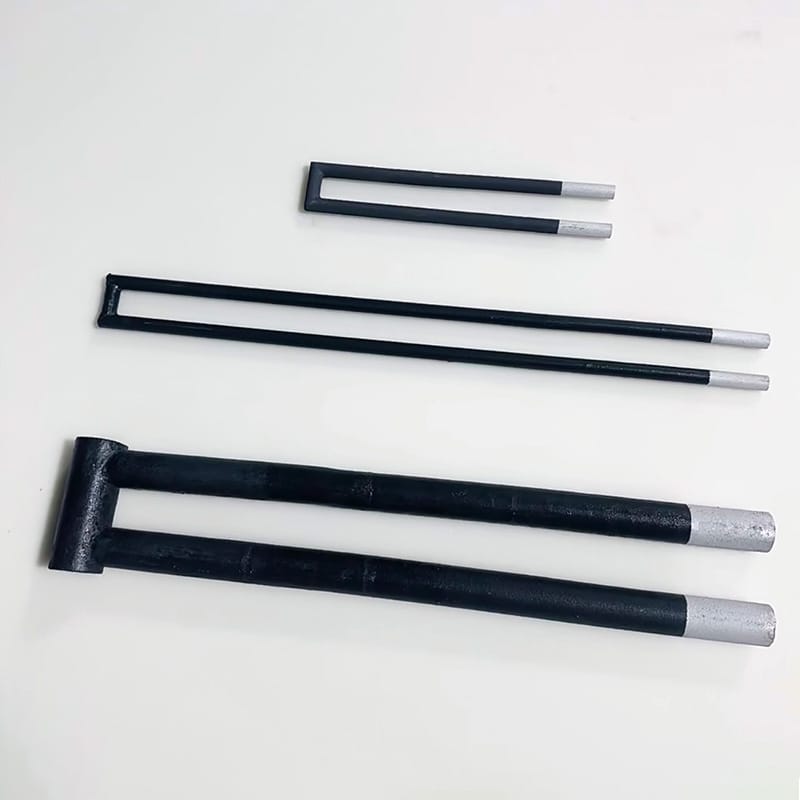
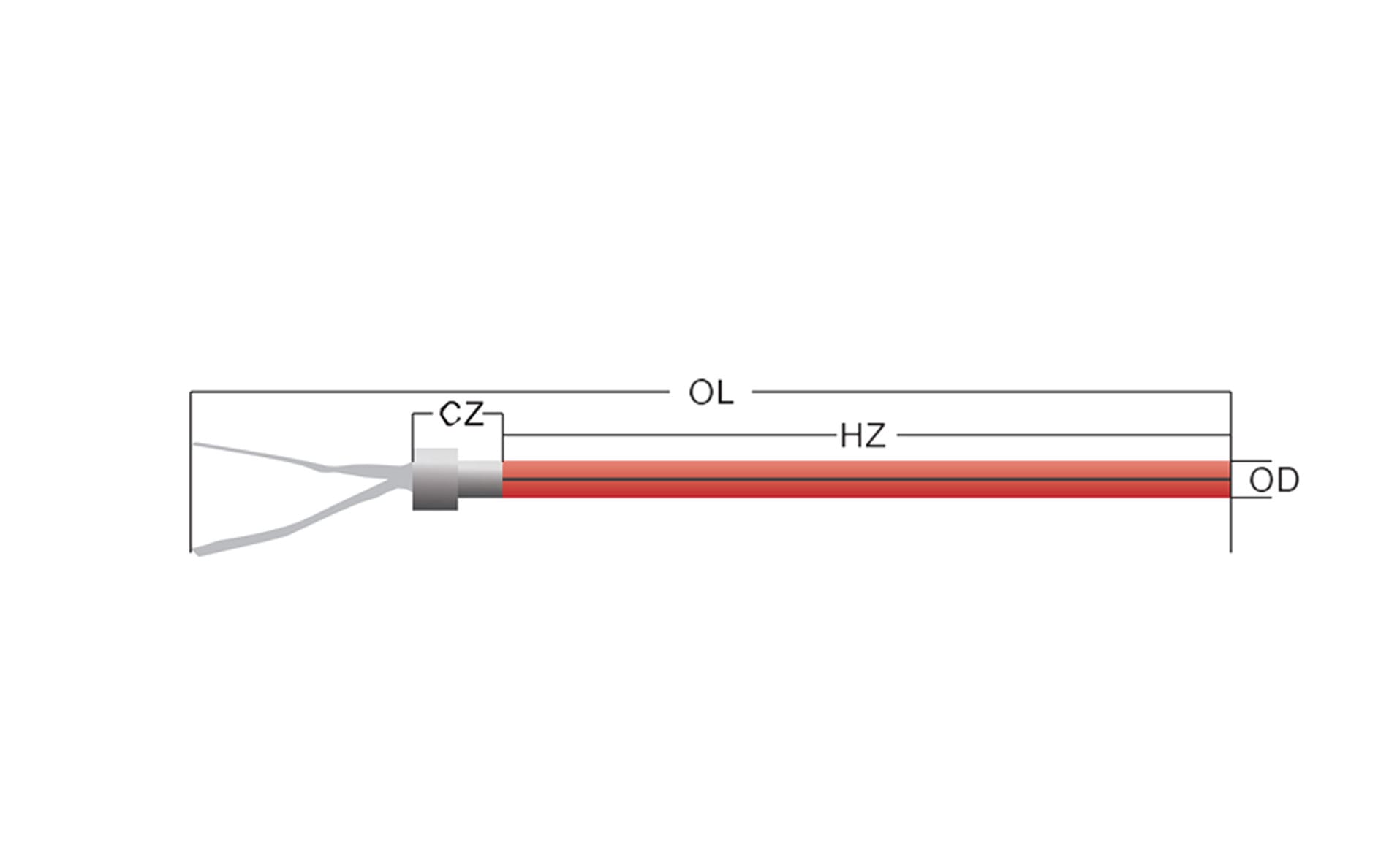
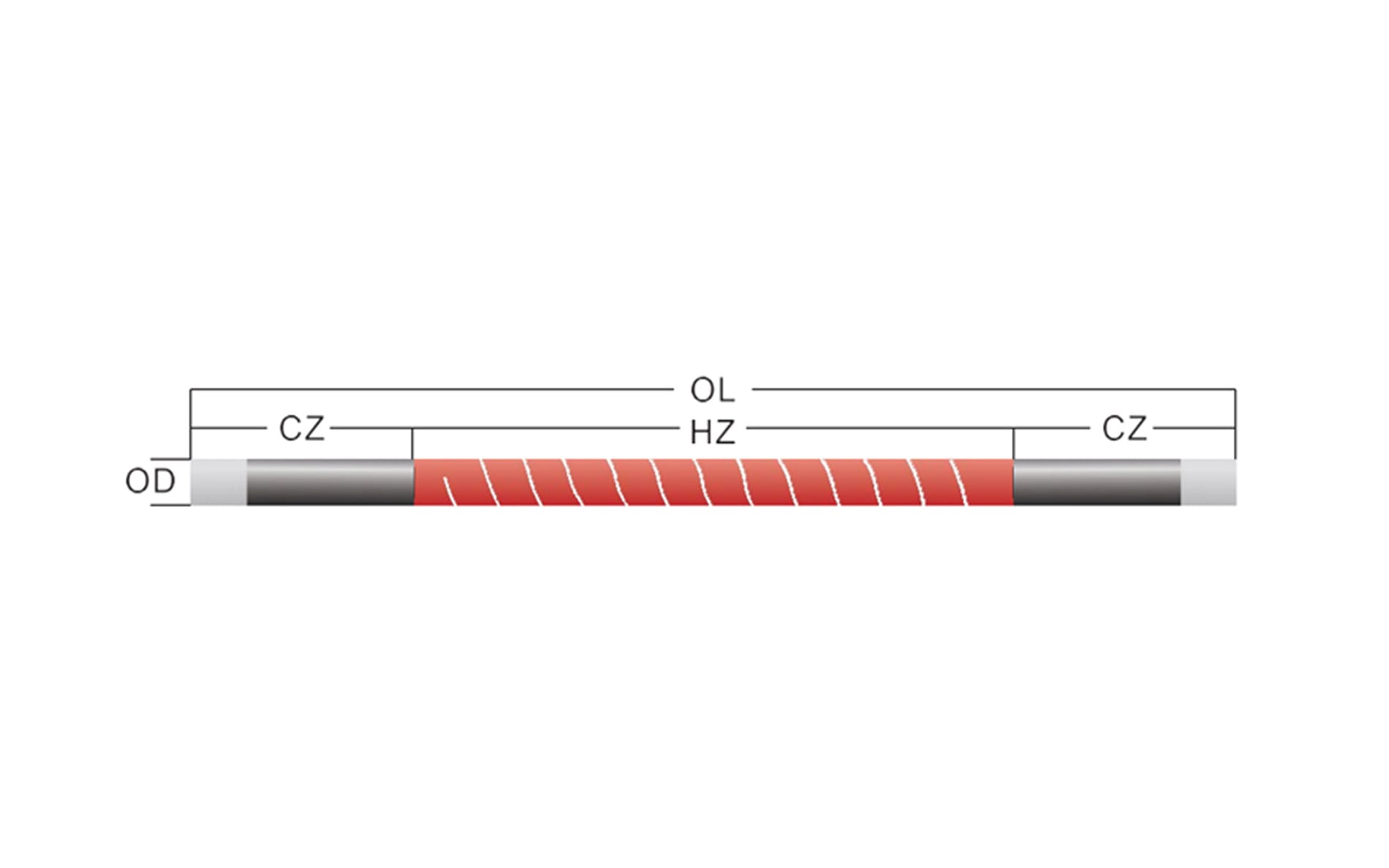
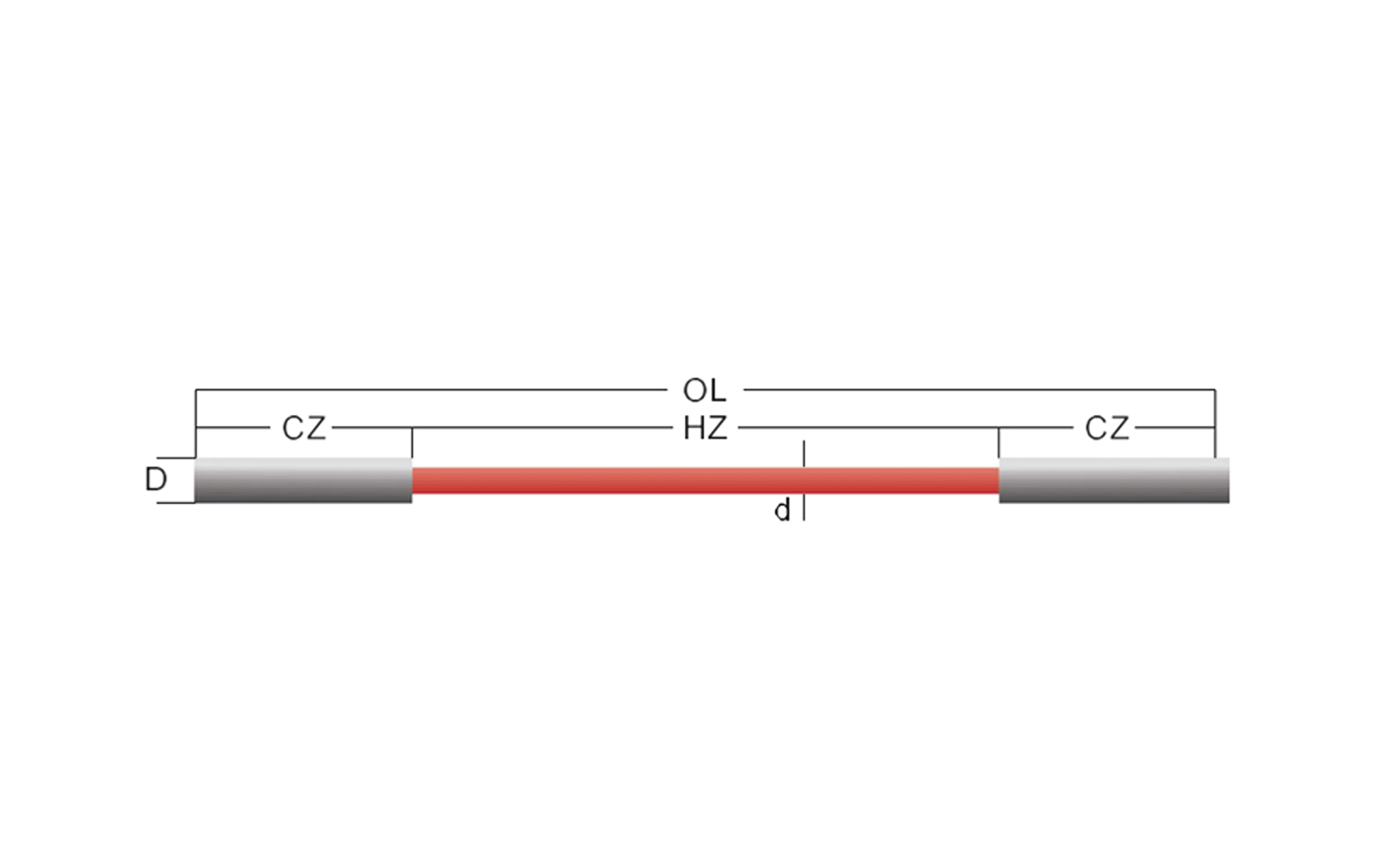
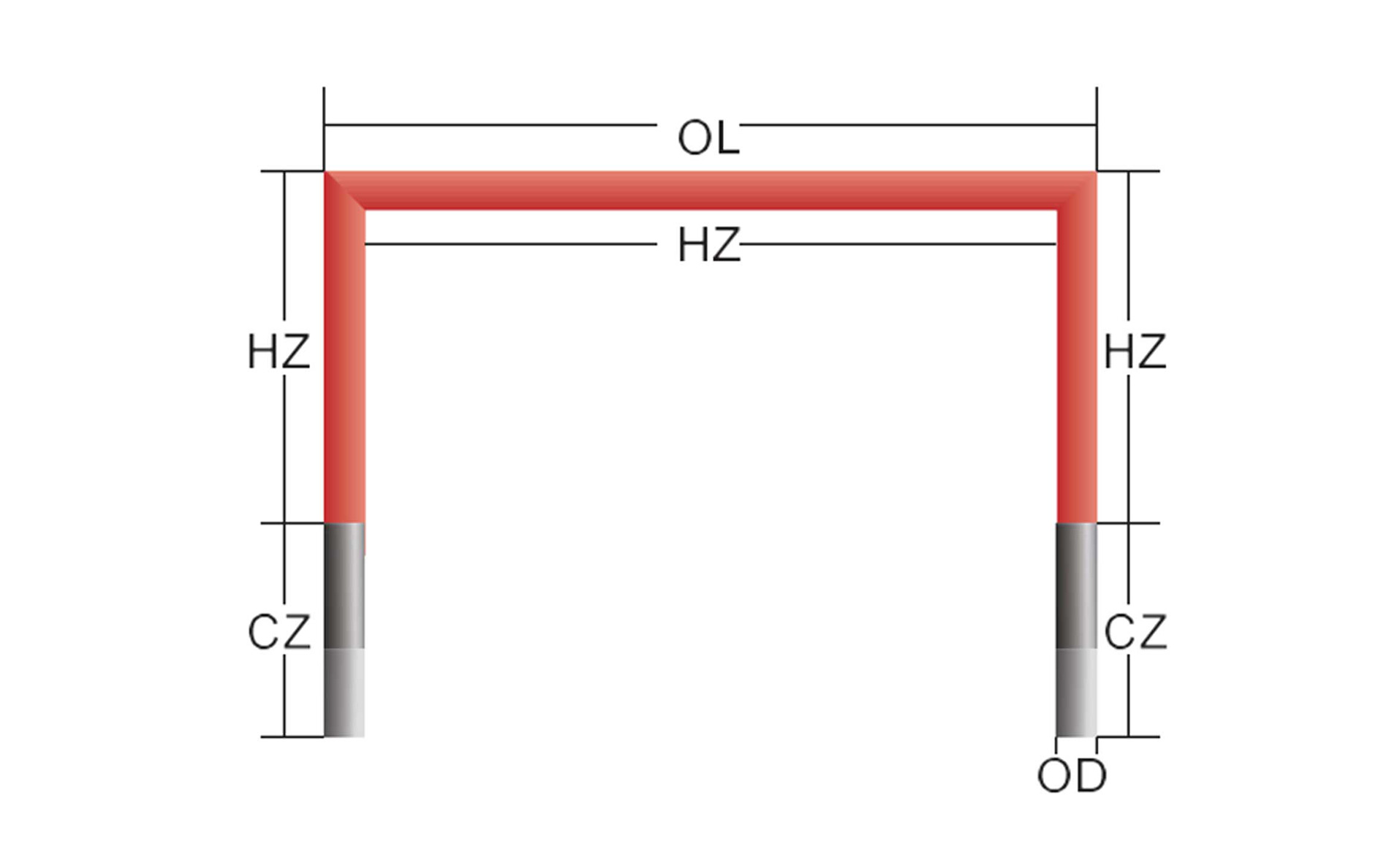
When requesting technical review, provide element type and drawing, hot-zone dimensions, resistance basis and history, voltage and current, chamber temperature, atmosphere composition and sequence, moisture data, load chemistry, cycle, photographs by position, service time, and quantity. The SG type, UX type, and other element pages can help identify geometry, but the application data determines the SiC heating element oxidation discussion.
Frequently asked questions
Is all SiC element oxidation harmful?
Not every surface change indicates abnormal damage. Evaluate the rate, uniformity, resistance trend, atmosphere, temperature, and process history before classifying SiC heating element oxidation as excessive.
Why do elements near the door change faster?
Door leakage, cooling, moisture entry, recovery power, and product handling can create a different local environment. Compare door-area data with the furnace centre.
Can resistance prove oxidation?
Resistance trend is important, but it should be combined with atmosphere, temperature, current, voltage, connection, position, and visual evidence. It does not identify SiC heating element oxidation chemistry by itself.
Does an inert-gas label guarantee an inert furnace?
No. Purity, leaks, moisture, purge, load emissions, pressure, and exhaust conditions determine the local gas seen by the element.
What photographs are most useful for a supplier?
Provide full element positions, close-ups of surface patterns and deposits, transitions, cold ends, terminals, penetrations, nearby refractory, gas inlets, and representative unaffected elements. Label every image by furnace position.
Diagnose atmosphere change with a complete evidence set
The word oxidation is only the start of the investigation. By mapping gas conditions, temperature, power, moisture, contaminants, position, resistance, and event history, a furnace team can distinguish normal development from an abnormal local exposure. That evidence makes SiC heating element oxidation corrective actions more specific and easier to verify.
For element selection or replacement, contact Qixiang Material with the element drawing, electrical data, furnace temperature, detailed atmosphere, cycle, load information, photos, resistance history, and quantity. The team can discuss suitable SiC element options while the responsible engineers approve the process, atmosphere, and furnace controls.